
AI Agents for Marketing: Use Cases and Production Workflows
A practical guide to AI agents for marketing teams: the use cases that survive production, the workflows that work, and what it takes to ship.
Most marketing teams have already run the demo. Someone wired up an agent to draft blog posts or answer support tickets, it looked impressive in a Loom, and then it never touched a real campaign. The gap between that demo and an agent that actually runs inside your marketing operations is where almost every project stalls.
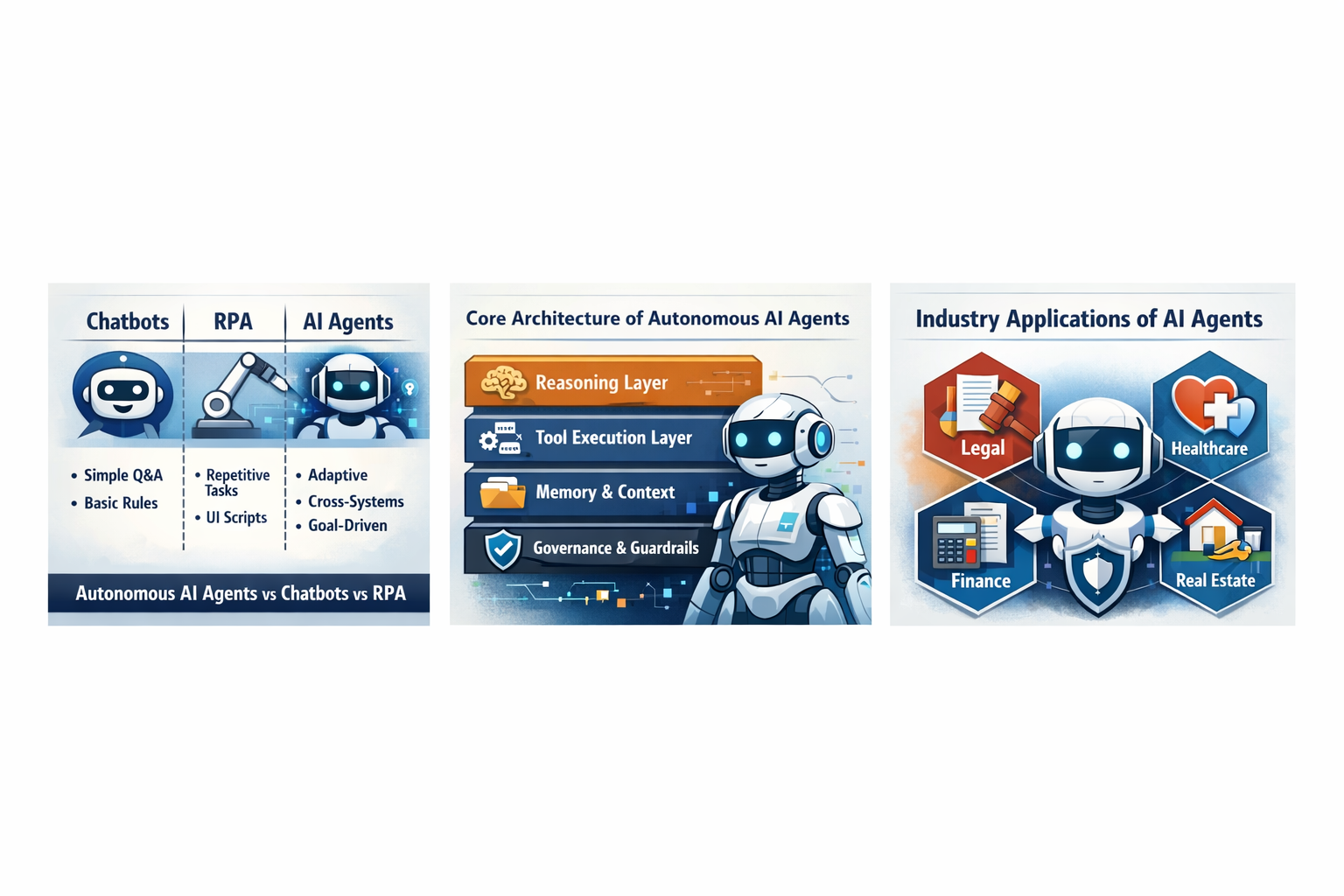
AI agents for marketing are not chatbots that write copy on request. An agent is software that takes a goal, decides on the steps, calls the tools it needs, and produces a result you can ship. The interesting question is not whether agents can write a subject line. It is which marketing work an agent can own end to end, reliably, without a human re-checking every output. This post covers the use cases that hold up in production, the workflows behind them, and what separates a pilot from a system your team trusts on Monday morning.
Where agents actually earn their keep in marketing
The strongest agent use cases share a shape: high volume, clear inputs, a measurable definition of done, and a tolerance for review on the edge cases. Marketing is full of work that fits.
- Campaign QA and trafficking. An agent pulls a campaign brief, checks every ad variant against brand rules, UTM conventions, and landing-page mapping, then flags mismatches before launch. The work is rules-heavy and soul-crushing for a human to do at volume.
- Lead enrichment and routing. When a form fills, an agent looks up the company, scores fit against your ICP, drafts the first outreach, and routes to the right rep in your CRM. This runs hundreds of times a day and never needs a meeting.
- SEO content production at scale. Not "write me an article," but a pipeline: pull the target keyword cluster, analyze the top-ranking pages, draft a brief, write the piece against your style guide, generate the meta and schema, and open a draft in your CMS for human approval.
- Reporting and anomaly detection. An agent queries your analytics warehouse every morning, assembles the weekly performance summary, and surfaces the three things that changed and why, instead of a marketer rebuilding the same dashboard narrative by hand.
- Inbound triage. Agents read incoming sales and partnership emails, classify intent, draft responses, and escalate the ones that need a human. The volume here is exactly what burns out a coordinator.
Notice what is missing: nothing on this list is "have the agent run the whole funnel autonomously." The work that ships is bounded, observable, and reversible.
What a production marketing agent workflow actually looks like
A useful agent workflow is less about the model and more about the plumbing around it. Take the SEO content example. The naive version is a prompt that returns 1,500 words. The production version is a chain of steps, each with its own checks.
The agent receives a keyword and a target page. It queries your keyword tool for volume and related terms. It fetches the current top-ranking URLs and extracts their structure. It pulls your house style guide and three published posts as few-shot examples so the voice matches. It drafts, then runs the draft back through a validator that checks word count, internal-link coverage, banned phrases, and whether every claim maps to a cited source. If a check fails, the agent revises rather than handing a human a broken draft. Only then does it write to the CMS as an unpublished draft with a human assigned to approve.
That is five or six tool calls, two validation loops, and one human gate, for a task a demo would show as a single prompt. The difference is that the production version produces output your editor can trust at a glance, and it does so 40 times a week instead of two.
The same pattern repeats across every use case. Real workflows have explicit tools, explicit guardrails, a memory of what they have already done, and a defined point where a human steps in. The model is one component. The system is the product.
The pilot-to-production gap is the whole game
Here is the uncomfortable industry number: most enterprise AI agent pilots never reach production. The reasons are rarely about model quality. They are about everything the demo skipped.
A demo runs once, on clean inputs, with the builder watching. Production runs thousands of times on messy inputs while everyone is asleep. The questions that kill pilots are operational:
- What happens when the CRM API times out mid-run?
- How do you stop the agent from emailing the same lead twice?
- Who gets paged when output quality drifts after a model update?
- Can you audit why the agent routed a £200k lead to the wrong rep last Tuesday?
- How do you roll back a change without taking the whole pipeline down?
Answering these is engineering work, observability, retries, idempotency, evaluation harnesses, access controls, human-in-the-loop checkpoints. It is the unglamorous 80% that determines whether your marketing team actually relies on the agent or quietly stops opening its output. Teams that treat the agent as a prompt ship a toy. Teams that treat it as production software ship something that compounds.
This is the work Gaper does as an AI-native implementation partner: taking an agent from a promising idea to something running in your real marketing stack, your CRM, your CMS, your analytics warehouse, your brand rules, with the guardrails and monitoring that let your team trust it unsupervised. Not a slide deck about agents. An agent that does the job.
How to scope your first marketing agent
The fastest path to a working agent is to pick the right first target. Use four filters.
Pick high-volume, low-ambiguity work. Lead enrichment beats "own our brand strategy." You want a task that runs often enough to matter and is concrete enough to define success.
Demand a measurable outcome. "Save the team time" is not a spec. "Cut campaign QA time from 3 hours to 20 minutes per launch with zero brand-rule misses" is. If you cannot measure it, you cannot tell whether the agent is working or quietly degrading.
Keep a human in the loop at the start. Ship with the agent drafting and a human approving. As trust and the evaluation data accumulate, widen the autonomy. Going fully autonomous on day one is how you get a wrong email blasted to 5,000 prospects.
Make sure the data and tools exist. An agent that needs to read your CRM needs API access, permissions, and a sandbox. Half of pilot delays are not AI problems, they are access and integration problems that surface the moment you leave the demo.
A good first project is narrow enough to ship in weeks and valuable enough that the team notices when it works.
What changes when it works
When a marketing agent genuinely lands in production, the shift is not "we replaced a marketer." It is that the repetitive, high-volume layer of the work runs on its own, and your people move up to the judgment calls.
The campaign QA agent means launches stop slipping because of a missed UTM. The reporting agent means Monday standups start with insight instead of a marketer assembling charts. The content pipeline means your editor reviews 40 solid drafts instead of writing two from scratch. The lead-routing agent means no inbound sits for six hours because someone was in a meeting.
The teams getting real value are not the ones with the cleverest prompts. They are the ones who picked a bounded use case, built the workflow as production software with proper guardrails, kept a human at the gate until the data earned more autonomy, and measured the outcome honestly. The model was never the hard part. Shipping it was.
Start with one workflow you can measure. Build it to run unattended. Then expand.
Related guide: n8n vs Custom AI Agents · AI Agent Use Cases
Thirty minutes, no commitment. We map one workflow, make the build or buy call, and scope the smallest thing worth shipping.
Frequently asked questions
What are AI agents for marketing?
What are the best first use cases for marketing AI agents?
Why do most marketing AI agent pilots fail to reach production?
Should a marketing agent run fully autonomously?
How does Gaper help with marketing AI agents?
Autonomous AI Agents for Enterprise Workflows
AI agentsHow to Evaluate AI Agents: A Test Plan for Production
A practical framework for evaluating AI agents before you ship: build an eval set, score the steps not just the answer, and gate every deploy on real metrics.
Jun 17, 2026IndustryAI Agents for Finance: FP&A, Close, and Reporting in Production
How finance teams put AI agents into production for FP&A, the monthly close, and reporting, what works, where pilots stall, and how to deploy safely.
May 29, 2026Ready to turn AI into execution?
Book a free assessment of one workflow. We map it, make an honest build versus buy call before any code, and if an off the shelf product covers the job we will tell you so.