Top Tech Stacks in 2026
Compare MERN, Java, Python, and mobile stacks for web, enterprise, and AI work, and see exactly how AI plugs into each one.
Top Tech Stacks in 2026: Web, Mobile, Enterprise, and AI
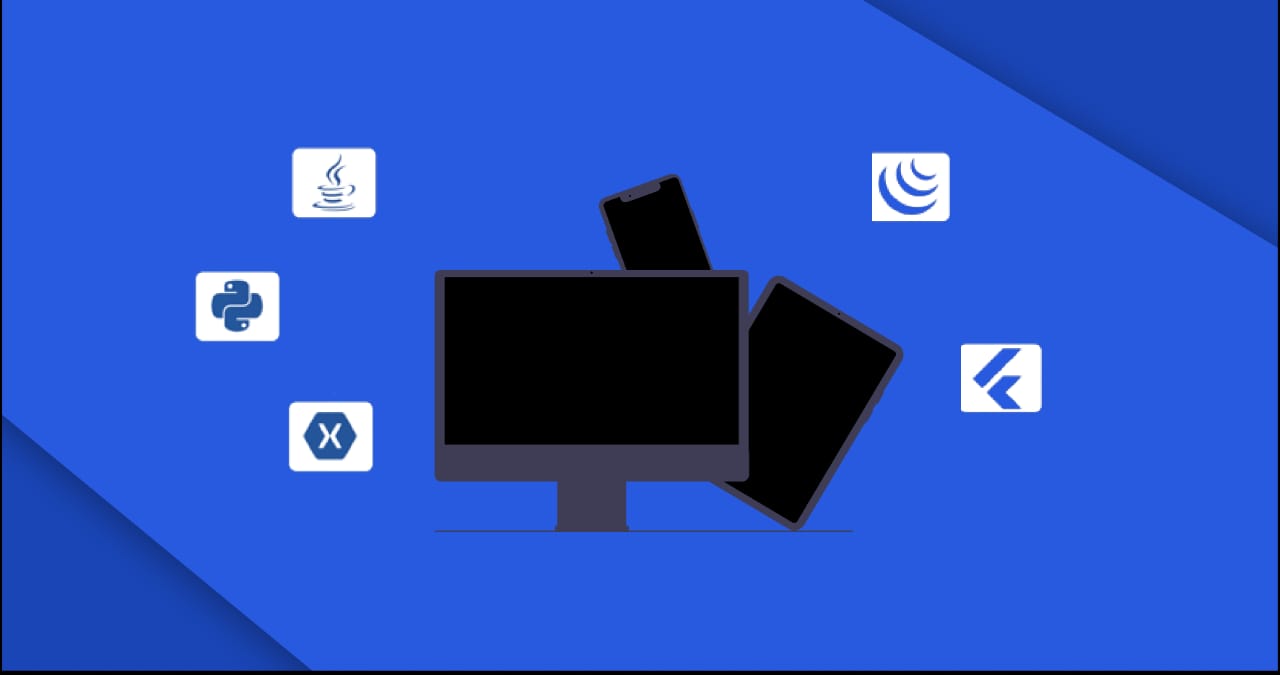
A technology stack is the combination of programming languages, frameworks, and tools your team uses to build software. The top tech stacks in 2026 span web development (MERN, MEAN, JAMstack), mobile (React Native, Flutter, native iOS/Android), enterprise (Java/Spring, .NET), AI/ML (Python, PyTorch, JAX), and data infrastructure (Postgres, dbt, Snowflake). Each stack trades off speed, cost, scalability, and team expertise.
Key Takeaways
- Web stacks like MERN enable rapid prototyping but require Node.js and MongoDB expertise
- Mobile stacks split between cross-platform (React Native, Flutter) for speed and native for performance
- Enterprise stacks prioritize stability and mature tooling over experimentation
- AI/ML stacks are rapidly consolidating around Python, PyTorch, and open-source LLM infrastructure
Table of Contents
- What Are Tech Stacks?
- Web Development Stacks
- Mobile Development Stacks
- Enterprise & Backend Stacks
- AI/ML & Data Stacks
- Comparison Table
- Decision Criteria
- How Gaper Shows Up
- Frequently Asked Questions
What Are Tech Stacks?
A technology stack is the set of programming languages, frameworks, libraries, and tools that work together to build a complete software application. Every modern application is built on a stack. A simple web app might use HTML, CSS, JavaScript (frontend) plus Node.js and Express (backend) plus PostgreSQL (database). A mobile app might stack React Native (cross-platform framework) on top of JavaScript. An AI system might layer PyTorch (deep learning framework) on Python plus CUDA (GPU acceleration).
Tech stacks vary enormously based on your requirements. A startup building a consumer app prioritizes speed to market and chooses MERN (MongoDB, Express, React, Node.js) because it ships fast in JavaScript across frontend and backend. A bank building a trading system chooses Java with Spring Boot because the Java Virtual Machine (JVM) ecosystem is mature, well-tested, and has 30 years of production stability. A machine learning team building recommendation engines chooses Python with PyTorch because the deep learning tooling is unmatched in that ecosystem.
The “best” tech stack does not exist in absolute terms. The best stack is the one that solves your specific problem within your constraints: timeline, budget, team expertise, and long-term maintenance. A stack that is perfect for a 3-person startup shipping a minimum viable product (MVP) in 6 weeks might be a disaster for a 500-person enterprise that needs to support millions of users and maintain code for 10 years. Understanding the top stacks in 2026 and their trade-offs is essential for making the right architectural decisions.
Web Development Stacks
Web development stacks dominate modern software because the web is the universal platform. Every application needs a web interface. The leading stacks combine JavaScript for the frontend with a backend technology that complements it. MERN is the most popular among startups and fast-moving teams. MEAN is more conservative. JAMstack (JavaScript, APIs, Markup) is the newest pattern for static-first, serverless architectures.
MERN Stack (MongoDB, Express, React, Node.js)
MERN is the most popular full-stack JavaScript framework for startups. MongoDB is a document database that scales horizontally. Express is a lightweight HTTP server framework. React is the leading frontend library. Node.js runs JavaScript on the server. The entire stack is JavaScript, which means a small team can hire full-stack engineers who understand the whole application from database to browser.
MERN excels at speed. A team can prototype and deploy new features in hours instead of weeks. MongoDB’s schema-less design means data models can evolve without painful migrations. The downside is that MongoDB’s eventual consistency model can introduce subtle bugs in mission-critical systems. MERN is less suitable for financial systems or healthcare where strict ACID compliance is non-negotiable. Learn more in our guide to MERN stack guide for teams getting started.
MEAN Stack (MongoDB, Express, Angular, Node.js)
MEAN is similar to MERN but substitutes Angular for React. Angular is a heavier, more opinionated framework that enforces structure. MEAN is popular in large enterprises and organizations that favor TypeScript from the start. The trade-off is that Angular has a steeper learning curve and generates more boilerplate code than React.
JAMstack (JavaScript, APIs, Markup)
JAMstack decouples frontend and backend. The frontend is static HTML, CSS, and JavaScript generated at build time. The backend is a collection of APIs (third-party or custom). This architecture scales to millions of users with minimal server cost because static assets are cached globally. Netlify, Vercel, and Cloudflare offer free tier deployments. JAMstack is ideal for content-heavy sites, blogs, and marketing pages. It is less suitable for real-time collaborative applications like Google Docs or Figma.
Mobile Development Stacks
Mobile development splits between cross-platform frameworks (build once, run everywhere) and native platforms (build separately for iOS and Android). The choice depends on your budget and performance requirements. Cross-platform saves money and time. Native delivers better performance and tighter platform integration. In 2026, React Native and Flutter dominate the cross-platform space.
React Native (JavaScript/TypeScript)
React Native allows JavaScript developers to build native iOS and Android apps without learning Swift or Kotlin. React Native code compiles to native code that runs on the device, delivering performance close to native apps. Facebook, Shopify, and Uber all use React Native at scale. The main limitation is that platform-specific features sometimes require dropping to native code.
Flutter (Dart)
Flutter is Google’s cross-platform framework built on Dart. Flutter apps compile to native code and deliver exceptional performance. The UI rendering engine is built from scratch, so Flutter apps look identical on iOS and Android without platform-specific code. Google, BMW, and Alibaba use Flutter in production. The trade-off is that Dart has a smaller ecosystem than JavaScript, so less third-party tooling.
Native iOS (Swift) and Android (Kotlin)
Native development delivers the best performance and deepest platform integration. Swift (iOS) and Kotlin (Android) are modern languages designed for mobile. Native stacks are required for performance-critical applications like games, augmented reality, or real-time communication. The downside is that you need separate teams for iOS and Android, doubling development cost and timeline.
Enterprise & Backend Stacks
Enterprise stacks prioritize stability, scalability, and maintainability over experimentation. These stacks have decades of maturity and are proven at scale in Fortune 500 companies. Java, .NET, and Go dominate enterprise backend development.
Java + Spring Boot
Java is the enterprise standard. The Java Virtual Machine (JVM) is a marvel of engineering: garbage collection, just-in-time compilation, and 30 years of performance optimization make Java fast and reliable. Spring Boot is the most popular framework for building REST APIs and microservices. JPMorgan Chase, Netflix, and Amazon all run massive Java deployments. The trade-off is verbosity: Java requires more boilerplate than Python or Node.js.
.NET (C#)
.NET is Microsoft’s enterprise stack. The .NET runtime is comparable to the JVM in performance and maturity. C# is a modern language with features like async-await that simplify concurrent programming. .NET excels in Windows-heavy enterprises where Active Directory integration and Office automation are requirements. Microsoft’s tech stack dominates financial services and government sectors.
Node.js + Express (JavaScript)
Node.js is the non-blocking, event-driven runtime that made backend JavaScript viable. It is ideal for I/O-heavy applications like real-time APIs, websocket servers, and microservices. LinkedIn, Uber, and Walmart run production Node.js deployments. Node.js scales efficiently because it uses events instead of threads. The trade-off is that Node.js is single-threaded, so CPU-intensive tasks (like video transcoding) require separate worker processes.
AI/ML & Data Stacks
Python's dominance here is not close. It leads the Stack Overflow Developer Survey 2025 on both usage and demand, and the entire model and data ecosystem (PyTorch, JAX, pandas, Hugging Face) is built around it. That does not mean your product has to be Python: a common and healthy pattern is a Java, Node, or Django application calling a Python service or a hosted model API for the AI parts.
AI and machine learning stacks are consolidating rapidly around Python and open-source frameworks. Python dominates because its syntax is clean, the NumPy and Pandas libraries are unmatched for data manipulation, and the deep learning frameworks (PyTorch, TensorFlow) are all built on Python. In 2026, large language model (LLM) infrastructure is becoming a critical part of ML stacks.
Python + PyTorch + CUDA
PyTorch is the leading deep learning framework. It prioritizes research-friendly APIs and dynamic graphs (graphs that change at runtime). CUDA is NVIDIA’s language for GPU programming. The combination of Python, PyTorch, and CUDA allows data scientists to write GPU-accelerated code at a high level of abstraction. OpenAI, Tesla, and Google all use PyTorch for large-scale AI training.
Python + JAX
JAX is a newer framework emphasizing composable functional programming and automatic differentiation. It compiles Python code to GPU/TPU kernels. JAX is popular in research environments and for cutting-edge AI work. The learning curve is steeper than PyTorch.
Data Infrastructure: Postgres, dbt, Snowflake
Modern data stacks layer PostgreSQL (relational database) or Snowflake (cloud data warehouse) as the foundation, add dbt (data build tool) for transformations, and add analytics frameworks like Mode or Looker for visualization. This stack decouples data pipeline development from application development, allowing data teams to own the transformation layer independently.
Comparison Table: Top Tech Stacks Side by Side
This table compares the top tech stacks across web, mobile, enterprise, and AI/ML. Use this to identify which stack aligns with your requirements.
| Stack | Best For | Strengths | Weaknesses |
|---|---|---|---|
| MERN | Startups, fast-moving teams | Full-stack JavaScript, rapid prototyping, single language | MongoDB eventual consistency, requires expertise in non-relational design |
| MEAN | Enterprise JavaScript projects, TypeScript-first teams | Type safety, structured architecture, Angular maturity | Steeper learning curve, boilerplate-heavy compared to React |
| JAMstack | Content sites, blogs, marketing, static-first applications | Global CDN caching, minimal server cost, SEO friendly, fast builds | Not suitable for real-time collaboration, complex state management |
| React Native | Cross-platform mobile apps where speed to market matters | Single codebase for iOS/Android, JavaScript expertise reused, fast iteration | Platform-specific features require native code, performance hit vs native |
| Flutter | High-performance cross-platform mobile apps | Exceptional performance, consistent UI across platforms, fast hot reload | Smaller ecosystem than React, Dart language less familiar to teams |
| Native iOS/Android | Apps requiring peak performance or deep OS integration | Best performance, access to all platform features, native developer tools | Separate codebases for iOS and Android, higher development cost |
| Java + Spring Boot | Enterprise systems, high-throughput backends, mission-critical apps | Mature ecosystem, JVM performance, proven at scale in Fortune 500s | Verbose syntax, steep memory footprint, learning curve |
| .NET + C# | Windows-heavy enterprises, financial services, government | Active Directory integration, Office automation, modern language features | Smaller open-source ecosystem, Windows-centric tooling |
| Node.js + Express | Real-time APIs, websocket servers, I/O-heavy microservices | Event-driven, non-blocking I/O, JavaScript reuse, fast JSON APIs | Single-threaded, CPU-intensive tasks require workers, not ideal for compute |
| Python + PyTorch | AI/ML research, large language models, deep learning applications | Dominant in AI, NumPy/Pandas ecosystem, CUDA support, rapid prototyping | Not suitable for production serving without additional frameworks, slow for CPU tasks |
| Postgres + dbt + Snowflake | Modern data warehousing, analytics, data-driven operations | SQL-first, decoupled transformation layer, cloud-native scalability | Requires data engineering expertise, not suitable for transactional apps |
How to Choose the Right Tech Stack
Choosing a tech stack is not a purely technical decision. It depends on your timeline, budget, team expertise, and long-term vision. Start by defining your constraints. If you have 3 months to ship an MVP with a team of 2, MERN is an excellent choice: JavaScript enables rapid development and you only need to hire JavaScript engineers. If you are building a payment processing system that handles billions of dollars annually, Java or .NET is non-negotiable because the ecosystem of financial libraries and compliance tooling is concentrated there.
Team expertise is often the deciding factor. A team of Python engineers will build faster and better on a Python stack than forcing them to learn Java. The friction of learning a new language is real and underestimated. Hiring engineers for your stack is a critical bottleneck. See our companion guide on top tech stacks for modern web development for the web-specific breakdown.
Consider your growth path. MERN might be perfect for a startup launch, but if you anticipate scaling to 100 million users, you may need to migrate to Java or Go later. That migration is expensive. Some teams hedge by choosing a stack that can grow with them (Java, Go) over one optimized for speed (JavaScript, Python). This trade-off between early speed and long-term scalability is the fundamental tension in stack selection. Netflix’s tech stack secrets reveal how they evolved their architecture as they scaled from startup to streaming giant.
The Missing Layer: Your AI Agent Stack
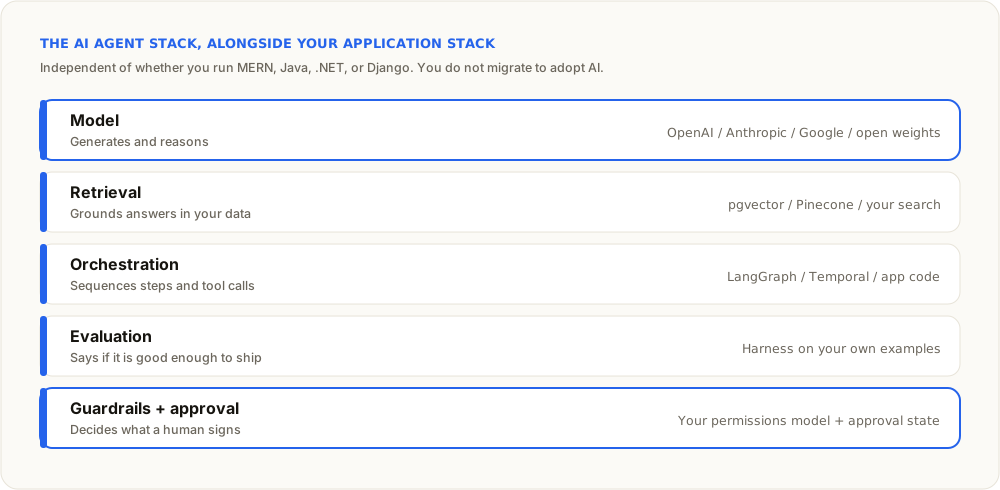
Every stack above answers how you build and serve an application. In 2026 there is a second stack sitting alongside it, and most teams end up with one by accident rather than by choice: the stack that runs AI inside the product and the business.
It has five parts, and it is deliberately independent of whether you run MERN, Java, .NET, or Django.
| Layer | What it does | Common choices |
|---|---|---|
| Model | Generates and reasons | OpenAI, Anthropic, Google, or open weights on a managed endpoint |
| Retrieval | Grounds answers in your own data | pgvector, Pinecone, Weaviate, or your existing search |
| Orchestration | Sequences steps and tool calls | LangGraph, Temporal, or plain application code |
| Evaluation | Tells you whether it is good enough to ship | A harness built on your own examples, run as a regression suite |
| Guardrails and approval | Decides what a human must sign off | Your existing permissions model, plus an approval state |
Two things are worth knowing before you choose any of it.
Your application stack barely constrains this decision. An agent runs behind an API in your own environment, and your application calls it like any other service. Adding AI to a Java monolith and to a Node service look substantially alike from the architecture side. That is good news, because it means you do not need to migrate stacks to adopt AI.
The evaluation layer is the one teams skip and then regret. A model choice is reversible in an afternoon. The harness that tells you whether the output is acceptable on your own data is what makes that choice safe, and it is the artefact that turns a shipping decision into evidence rather than opinion. Build it before you commit to a model, not after.
How AI Plugs Into Each Stack
The generic advice is that your stack does not constrain your AI choices. That is true architecturally, but it is not useful when you are the one wiring it up. Here is the concrete integration point for each stack covered above: where the call belongs, what runs the background work, and what usually bites.
| Stack | Where the agent call belongs | Background work | The thing that bites |
|---|---|---|---|
| MERN / MEAN | An Express route or a service module | BullMQ or a queue on Redis | Long model calls block the event loop pattern teams expect; stream instead of awaiting |
| JAMstack | A serverless function or edge route | A queue or scheduled function | Function timeouts are shorter than model latency; stream or move to a background job |
| Django / Python | A view, or better a service layer | Celery tasks | Writing model output straight through the ORM; validate at the serializer first |
| Java + Spring Boot | A @Service calling an HTTP client | @Async or a message broker | Thread-per-request pools exhausting on slow calls; use reactive or bounded pools |
| .NET | A typed HttpClient in a service | Hosted services or a queue | Same blocking risk; keep calls async all the way down |
| React Native / Flutter | Never directly from the device | Server-side only | Shipping API keys in the app bundle, which is the single most common mistake |
| Python + PyTorch | In-process or a separate inference service | Ray, Celery, or a job runner | Conflating training infrastructure with serving infrastructure |
Three rules that hold across every row:
- Keys stay server-side. No model API key ever reaches a browser or a mobile bundle. Proxy through your own backend, always.
- Model calls are slow and fail often. Treat them like an unreliable third-party network call, with timeouts, retries with backoff, and a fallback path. Not like a local function.
- Validate before you persist. Model output passes through the same validation as untrusted user input, because that is what it is. Anything consequential goes to a pending state for human approval rather than straight into a system of record.
Migrating Stacks: When It Is Worth It
Since AI does not require a migration, it is worth being clear about what does. The honest answer is: less often than teams think, and the cost is consistently underestimated.
Genuine reasons to migrate:
- A hard scaling ceiling you have actually hit, measured, not predicted.
- You cannot hire for the stack in your market at a price you can pay.
- The framework is unmaintained or has no security support path.
Bad reasons, in rough order of how often they appear:
- A newer framework benchmarks faster on a synthetic test.
- One senior engineer prefers something else.
- A rewrite feels easier than understanding the existing system, which it never is.
If you do migrate, do it incrementally. Put a stable interface in front of the old system and move one route or service at a time behind it. Full rewrites routinely take several times their estimate and stall feature work for the duration.
Total Cost of Ownership by Stack
License cost is rarely the deciding factor. These four are, and they compound over years.
| Stack | Hiring market | Infrastructure cost | Maintenance burden | Where cost actually lands |
|---|---|---|---|---|
| MERN / MEAN | Deep and inexpensive | Low, runs anywhere | Moderate, dependency churn is real | Refactoring as the codebase outgrows loose typing |
| Java + Spring Boot | Deep, more expensive | Higher memory footprint | Low, very stable | Salaries and slower initial delivery |
| .NET | Solid, especially enterprise | Moderate, strong on Linux now | Low, well-tooled | Licensing in some enterprise setups |
| Python (Django / FastAPI) | Deep and inexpensive | Low | Moderate, watch dependency drift | Performance work if traffic outgrows the design |
| Go | Thin and expensive | Very low, small binaries | Low | Hiring, which is the binding constraint |
| React Native / Flutter | Deep (RN), narrower (Flutter) | Low | Moderate, platform updates | Native modules for anything platform-specific |
The pattern worth internalising: the stack with the cheapest engineers is usually not the cheapest stack, and the stack with the fastest initial delivery is often not the cheapest to maintain. Hiring depth dominates the long-run number for almost every team under 50 engineers.
Choose by Constraint, Not by Preference
Work down the list. The first line that describes your hardest constraint gives you your answer.
Your binding constraint is speed to market
MERN, Django, or Rails. One language across the stack, deep ecosystems, and the fastest path from idea to running product. Accept that you will refactor later, and that this is a reasonable trade.
Your binding constraint is hiring
Whatever your local market actually supplies. A theoretically superior stack you cannot staff is a liability. Check real job-board supply in your market and price range before committing.
Your binding constraint is regulatory or transactional integrity
Java with Spring Boot, .NET, or Python with a relational database. Strict schemas, real transactions, mature audit and security tooling. Document-first databases make guarantees harder to enforce here.
Your binding constraint is raw throughput or latency
Go or Rust for the hot path, and keep the rest of the product on something ordinary. Rewriting everything for the 5% of traffic that is latency-sensitive is a common and expensive mistake.
Your binding constraint is AI and data work
Python for the model and data layer, whatever you like for the product. The two are separate decisions, and treating them as one narrows your options for no benefit.
What Changed in Stack Selection for 2026
Four shifts worth knowing, because they change advice that was correct three years ago.
The frameworks converged. Server components, streaming rendering, and signals-style reactivity now appear across React, Vue, Angular, and Svelte. The technical gap narrowed enough that ecosystem and hiring pool decide more than architecture does.
TypeScript became the default. Not a differentiator anymore, an expectation. A greenfield JavaScript project without it now needs a justification.
The database question got more interesting than the language question. Postgres absorbed use cases that used to require separate systems (JSON documents, full-text search, and with pgvector, embeddings). For many teams the honest answer is one Postgres instance instead of three specialised stores.
AI became a layer, not a stack. This is the biggest change and the one most misunderstood. Adopting AI does not mean migrating your application. It means adding a model, retrieval, orchestration, evaluation, and an approval gate alongside whatever you already run.
How Gaper Shows Up
Gaper is an AI-native implementation partner. We build and deploy supervised production AI agents into the applications and workflows a business already runs, whichever stack it runs on, in your environment, on your data, with the approval gates your process requires. Your team owns what we build.
We do not sell engineer hours. The deliverable is a governed workflow your team runs and can change. For the build decision see build vs buy AI agents, AI agent development cost, and AI agent ROI. On the technical shape, deploy AI agents, RAG vs fine-tuning, and AI agent data privacy for enterprises. For the wider path, how to become AI-native.
Book a free AI assessment and we will map where an agent adds the most leverage on your current stack, and scope the smallest thing worth shipping. Free, 30 minutes, no obligation. Or talk to an AI architect.
Frequently asked questions
Why is MERN popular for startups but unsuitable for financial systems?
When should a team choose Java with Spring Boot over Node.js?
What is the difference between cross-platform and native mobile stacks?
How much does tech stack choice impact performance?
Do I need to change my tech stack to add AI features?
What is an AI agent stack and how does it differ from a tech stack?
Which tech stack is best for AI and machine learning work?
How hard is it to change tech stacks mid-project?

Ready to turn AI into execution?
Book a free assessment of one workflow. We map it, make an honest build versus buy call before any code, and if an off the shelf product covers the job we will tell you so.