
Developer Interviews: 5 Types and how to deal with them
Congratulations on the interview call! Here's a comprehensive guide on the type of developer interviews you may encounter and how to ace them

Don’t downplay yourself and act as a roadblock to your own journey. Once you have decided to plunge into the life of a developer; here are the 5 types of interviews you may come across and need to prepare for.
Whiteboard:
White board interviews entail the interviewer handling out a problem that you have to then solve on a white board. This could either be an Algorithm related problem or an architectural one. You will be tested on your knowledge of data structures, sorting algorithms, recursion, time/space complexity analysis as well as pattern and edge-case recognition.
Prepared to be asked to design a system such as a car parking system, chat messenger etc. The key to ace this is to ask questions and think out loud. This way the interviewer can know how well you can articulate problems and solve them.
Mockups:
Mockups will include some real life scenario such as you could be asked to build a sign up form with validation.Or you could be asked to build a responsive navigation bar etc. Another common scenario could be the interviewer asking you to find bugs and patch them. This in all honesty, is difficult to prepare for. The best you can do is practice beforehand as much as possible. Another common mockup interview is the pair and programme. You will be paired with a fellow programmer in a developer environment and given a list of tasks much like in the real world.
Unlike the whiteboard developer interviews, syntax here matters. Make sure you are well prepared and know your language and environment inside out. The best way to go handle these types of interviews is to not fiddle with optimization. Write your code and explain to the interviewer how you would do it differently in production.
Take-home challenge:
Take home challenge interview involves a coding task that is time-bound. Always try to speed things up, the quicker turn-over you demonstrate the better. Remember to master your set-up and practice. Some example challenges that you can practice on can be building a:
- Tic-tac-toe game
- Pinterest clone
- Wikipedia viewer etc.
Domain and operating systems:
The test of the domain is a tricky one because it will depend a lot on your past experience and knowledge. Even though programming is pretty much the same across different languages, this interview focuses on the aspects that cannot be transferred between languages and frameworks.
Behavioral/culture:
These types of developer interviews are usually always paired with the above mentioned ones. You will be asked a set of questions bound in a certain scenario such as how do you deal with failure or how do you deal with conflict. Companies put huge emphasis on this because this determines how well you will adjust to and perform given the role. Be genuine; Don’t be afraid to talk about your weaknesses and how you effectively manage them. Because in reality we all have some. Demonstrate your ability to take initiative and remember to always show passion for your work.
Industrial Placement with Gaper Academy
Places like Gaper academy offer intensive industrial placement programs. These will help you set your place in the practical world. You also get access to the huge peer and mentor network
Thirty minutes, no commitment. We map one workflow, make the build or buy call, and scope the smallest thing worth shipping.
Frequently asked questions
What are the five types of developer interviews?
How should you approach a whiteboard interview?
Does code syntax matter in a mockup interview?
How should you handle a behavioral or culture interview?
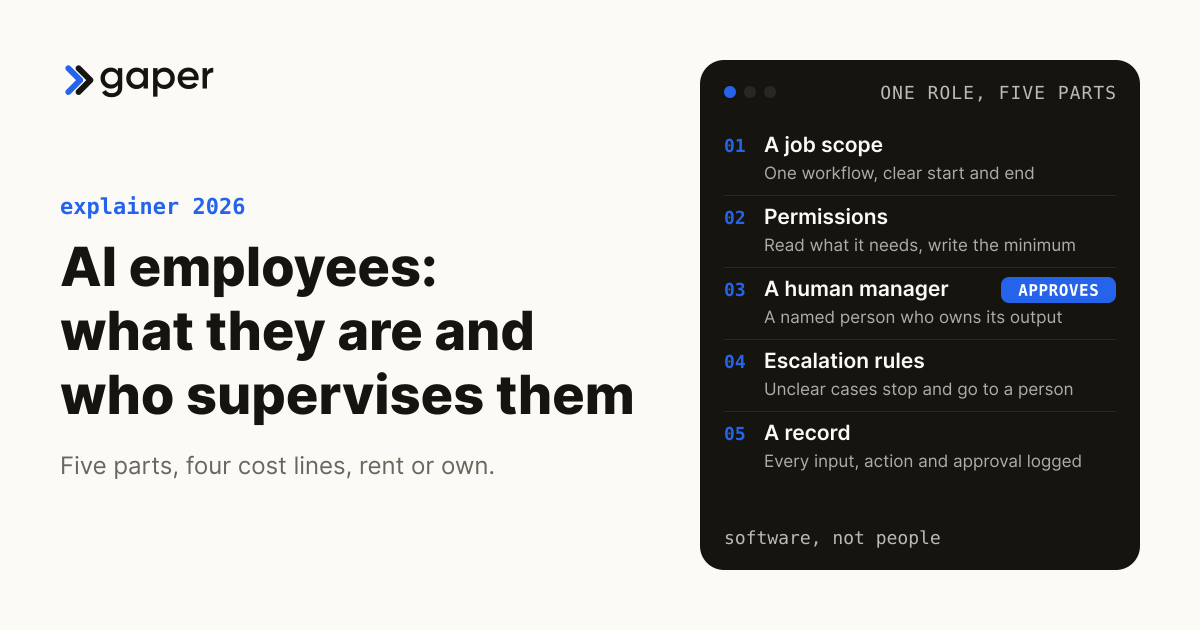
AI Employees: What They Are, What They Cost to Run, and Who Supervises Them
AI agents7 Reasons AI Agent Projects Fail (and How to Avoid Them)
Most AI agent projects die between the demo and production. Here are the seven failure modes that kill them, and the operating decisions that get agents shipped.
Mar 27, 2026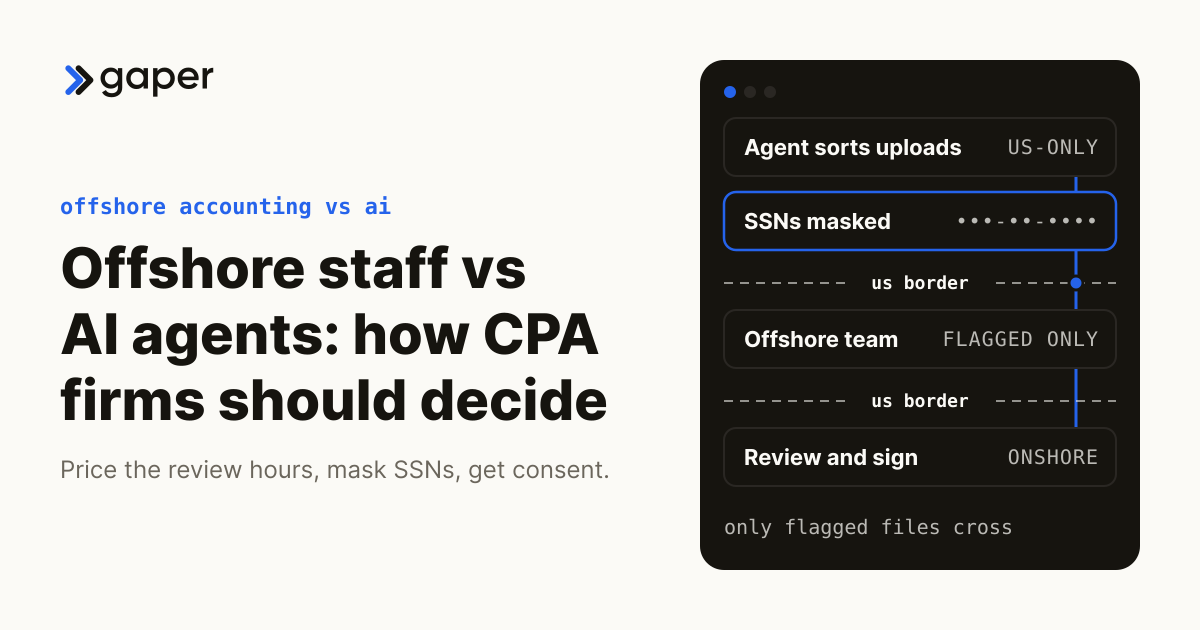
Offshore Accounting Staff vs AI Agents: How CPA Firms Should Decide
Ready to turn AI into execution?
Book a free assessment of one workflow. We map it, make an honest build versus buy call before any code, and if an off the shelf product covers the job we will tell you so.