
Numerous blockchain-based ventures can earn you instant revenue. However, these businesses remain obscure, and locating them can be a cumbersome task.
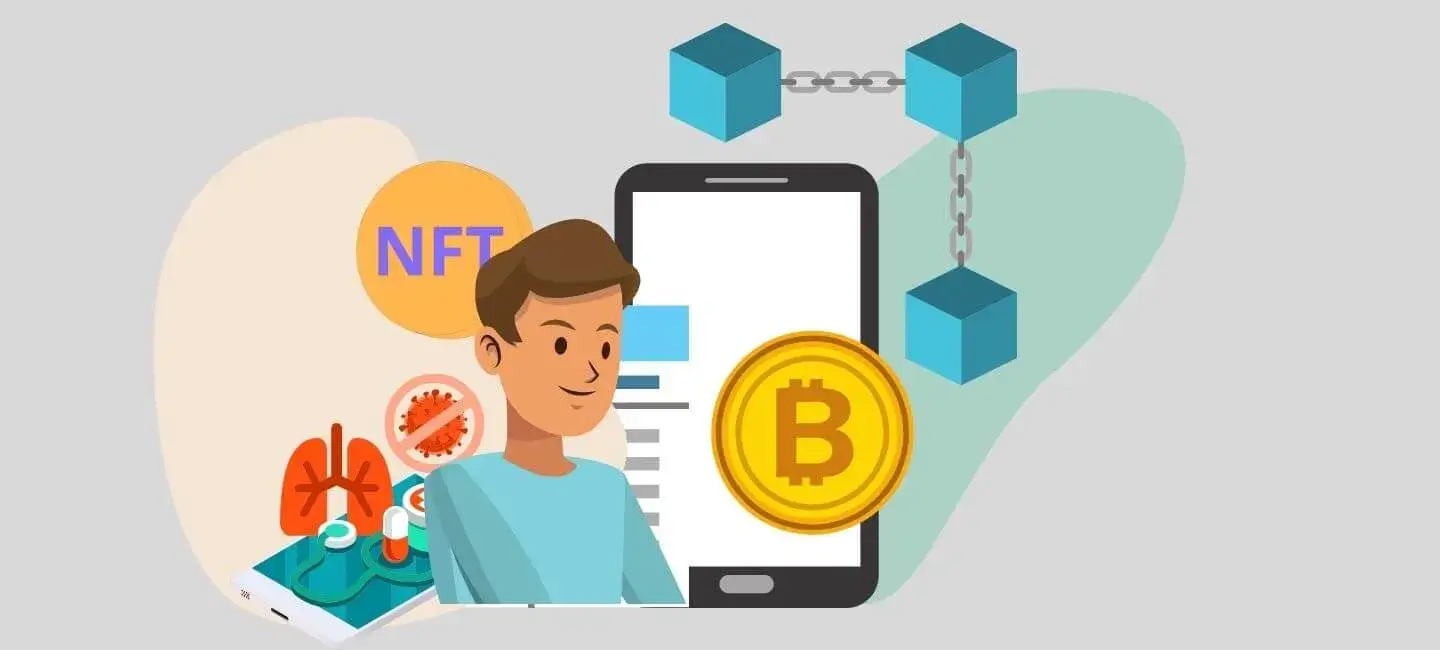
This article will showcase some intriguing startups that offer a low-stress entry into generating income. Let’s dive in!
Although we have an abundance of articles on blockchain and cryptocurrency, we will provide a brief introduction to blockchain technology. This will give you an understanding of how blockchain can benefit businesses, followed by an exploration of how to start a blockchain business.
A blockchain is a decentralized ledger that records all peer-to-peer transactions. In a blockchain, participants can confirm transactions even without the need for a central clearing authority using this technology. Fund transfers, trade settlements, and voting are all possible applications.
Outlined below are three major business sectors that have leveraged blockchain technology to increase return on investment, reduce costs, and enhance data security. These examples provide a glimpse into the potential applications of blockchain for starting a business.
We will expand upon four sectors in which you can take the lead with the implementation of blockchain technology.
There are several blockchain applications in healthcare. The healthcare industry across the globe is facing a multitude of challenges. These challenges range from data breaks to the ever-increasing cost of healthcare. The US has decided to spend 20% of its GDP on healthcare. Yet, with cost heavy issues pulling it down in a constant way, hence technologies like blockchain helps to ease the burden.
Blockchain is already using in the industry in a secure way. While transferring patient data and managing data to prevent outbreaks, Estonia is one country that is ahead of blockchain in healthcare.
Estonia began adopting blockchain technology. They used it for healthcare data security and transaction processing in 2012. All the country’s healthcare billing is now done on a blockchain. About 95% of health data is now stored on a ledger with 99% of all prescription data is being digitized.
Blockchain is utilized for its ability to maintain an immutable and decentralized ledger. It is commonly employed to create transparent logs for patient data and deployed in security applications. Moreover, while blockchain is publicly visible, it can also ensure privacy by concealing an individual’s identity behind complex and secure algorithms. This preserves the sensitivity of medical data.
Healthcare services providers share the same information for safety concerns. Thanks to the technology’s decentralized structure, between 2009 and 2017, data breaches exposed over 176 million patient records.
Credit cards, banking information, health and genomic records, were once hacked by criminals. The largest data crack was in 2015 at Anthem Inc where 78,80 0,000 individuals were affected which shows that security has huge potential when it comes to starting a new business within the healthcare industry which one can develop a blockchain business model at ease.
There are a few healthcare Blockchain companies which have incorporated blockchain implementation such as:
Blockchain companies like Akiri provide a network-as-a-service. Akiri has an exclusive design model for the healthcare businesses. It can assist in the secure transfer of health data. The Akiri system is also one of the best Blochian business ideas as it does not keep any data for retention. Instead, it acts as both a network and a protocol. At the same time, allowing administrators to create regulations and configure data layers while checking data sources and destinations in real-time.
Blockchain is being employed in the healthcare industry not only for data security but also for research purposes. Currently, electronic health records only permit automatic updates and sharing of medical information within a single organization or network of organizations, limited to a single person.
With blockchain, this specific task can also be extended so that the data could arrange in a well-structured way where the uppermost layer of the blockchain only contains information which is not PHI or personally identifiable information (PII).
This gives researchers and other organizations access to a wide range of data. While including ill-person cohorts numbering in the hundreds of thousands, clinical research, safety events, and adverse event reporting & identification use blockchain tech. Furthermore, public health takes benefits from the availability of massive amounts of data.
Blockchain has various potential applications throughout the real estate industry, covering the entire property value chain. In brief, blockchain can be utilized for transmitting payments in real estate transactions, using established cryptocurrencies or initial coin offerings (ICOs) in token form.
Digital land registers, such as those used in real estate in Sweden, are an actual application of blockchain technology. Smart contracts are utilized, which are computer protocol-based electronic contracts capable of recording clauses or rules.
Blockchain can automatically execute defined actions in response to trigger events without requiring a written document. Over time, the technology will also enhance market transparency and help resolve principal-agent disputes.
To start a blockchain-based business, Smart Contracts are an excellent place to begin. They enable the creation and purchase of contracts, assess crucial real estate valuation data, and map real estate data throughout the value chain. Furthermore, they offer the potential to store sensitive data securely on the blockchain in the future.
Need help with using blockchain for your business? Look no further, as we have the answer.
There are few Real estate blockchain applications-based companies that you should keep an eye out for:
Companies like Vairt are utilizing blockchain to help people so they get better ROIs with their real-estate investments. Moreover, they have incorporated a list of blockchain applications for people. Vairt provides a platform that allows users to develop. They also diversify the global real estate network to generate secondary income.
This robust platform provides a variety of resources. These tools to help investors to get the most out of their fractional real estate investments while including market overviews and insights on neighborhoods. Moreover, property analysis, and long-term support, all of which are by a blockchain network.
ManageGo is another such startup that allows property owners to leverage blockchain. It helps to manage their real estate more in an efficient way. Property managers and owners can use the ledger-backed software to process payments.
DLT, or Distributed Ledger Technology, is helping landlords gain a more transparent history and comprehensive view of payment history and renter backgrounds. This technology can also perform extensive credit background checks and manage maintenance tickets.
Urban planning is an area benefiting greatly from blockchain technology. Due to government restrictions, the public is often unable to express their desires through urban planning procedures.
Blockchain offers incentives such as educational resources and token-based participation, as well as feedback loops between stakeholders in planning platforms. These features promote community participation and enable better incorporation of local communities into the property development value chain and developer services, leading to long-term success.
The power of blockchain is to generate trust in a trustless ecosystem. It uses public ledgers and strengthened cybersecurity procedures which has good implications for the insurance industry’s future growth along with artificial intelligence and big data. The potential of using blockchain in insurance is dependent on three distinct characteristics.
Insurance is a vast domain for entrepreneurs looking to leverage blockchain technology. The emerging blockchain ecosystem offers numerous opportunities for extensions and endorsements for different types of insurance, including financial loss, crime, professional, surety bonds, and cyber insurance. This technology also serves as a template for coverage for technology and software projects. To assess risk and offer advice on loss control and mitigation best practices, insurers may collaborate with tech businesses such as ConsenSys Diligence.
Etherisc is an example of a business. Who creates decentralized, blockchain-based insurance products for a variety of industries? The organization is concentrating on reducing inefficiencies. Such as high processing costs and lengthy claim processing times by implementing ledger technology.
They have already created six insurance-related decentralized applications. One of these is a crop insurance app which allows farmers to track their land and crops, as well as any weather-related losses. Another program protects Etherisc users from cryptocurrency wallet hacking which keeps the blockchain transactions for security.
Another example is FidentiaX which is a marketplace, the first of its kind, for tradeable insurance policies. They launched ISLEY, a blockchain-powered digital database for insurance policies. ISLEY provides consumers with a comprehensive overview of their insurance policies. Also alerts them when premiums are due, and keeps a permanent record of your full policy history.
According to an estimation, Insurance fraud costs more than $40 billion per year. Yet, it is difficult to detect using traditional approaches. By integrating claims data among insurers, blockchain’s shared ledger technology. It can help to advance fraud detection. Blockchain technology can save insurers money by promoting greater data exchange, also reducing the cost of paying for public and subscription data to prevent fraud.
The insurance sector has a number of issues such as including inefficiency, fraud, human error, and, most important, cyberattacks. Identity thefts have the biggest impact. Yet, this allows for so much room in terms of innovation and starting new businesses.
A digital asset that depicts real-world elements like art, music, in-game items, and films, is NFT. They are bought and traded online, often using cryptocurrency. They are also usually encoded with the same software as many other cryptos. Similarly, physical money and cryptocurrencies are both “fungible,” which means they can do trade or exchange with each other.
Cryptocurrencies are also fungible, meaning one unit of a particular cryptocurrency is always equal in value to another unit of the same cryptocurrency. This feature makes cryptocurrency a secure means of conducting blockchain transactions. On the other hand, non-fungible tokens (NFTs) are unique digital assets that cannot be substituted for one another due to their distinct digital signatures.
CryptoKitties was the first semi-mainstream exposure to NFTs in the world. The Ethereum-based game debuted in 2017. In actuality, allowing users to collect, sell, and breed digital cats. Such as “Dragon,” a CryptoKitty that sold for 600 Ether ($172,000 at the time) in September 2018. At today’s values, that’s more than $1.4 million!
Game producers are adding functionality to their products, tokenizing in-game digital assets, indicating something. This means that, we can no longer disregard digital assets in gaming which opens up a world of possibilities for people looking to start a business in NFTs.
While having a brilliant blockchain business idea is the starting point, the technical execution determines whether your venture thrives or becomes another failed startup statistic. The blockchain development landscape requires specialized expertise that goes far beyond traditional web development. Smart contract programming, consensus mechanism implementation, cryptographic security, and distributed system architecture are just the foundation skills your team needs.
The challenge facing most blockchain entrepreneurs is accessing top-tier talent without the Silicon Valley price tag. Traditional hiring approaches often take 3-6 months and cost upwards of $150,000 annually for senior blockchain developers. This is where strategic partnerships with specialized platforms become game-changing. Gaper.io’s network of 8,200+ vetted engineers includes blockchain specialists who have built solutions for Fortune 500 companies, starting at just $35/hour – a fraction of what you’d pay through traditional channels like Toptal.
What makes blockchain development particularly complex is the interdisciplinary nature of the technology. Your team needs developers who understand not just the technical aspects, but also the regulatory compliance requirements specific to your industry. For healthcare blockchain applications, HIPAA compliance is non-negotiable. For financial services, understanding SEC regulations and anti-money laundering requirements is crucial. Insurance blockchain solutions must navigate state-specific insurance regulations.
The most successful blockchain businesses we’ve observed follow a specific team composition: a lead blockchain architect with 5+ years of experience, 2-3 full-stack developers with smart contract expertise, a security specialist focused on cryptographic implementations, and a DevOps engineer experienced with distributed systems deployment. This team structure typically costs $800,000+ annually when hired traditionally, but can be assembled for under $300,000 through strategic partnerships with platforms that specialize in vetted engineering talent.
The regulatory landscape for blockchain businesses shifts constantly, with new guidelines emerging from the SEC, FDA, state insurance commissioners, and international bodies quarterly. Understanding these regulations isn’t just about legal compliance – it’s about building sustainable competitive advantages and avoiding the costly pivots that kill promising startups.
In healthcare, the FDA’s guidance on blockchain applications in drug traceability and patient data management creates both opportunities and constraints. Companies like Pfizer and Walmart have successfully navigated these regulations for supply chain applications, but smaller startups often struggle with the compliance complexity. The key is building regulatory considerations into your technical architecture from day one, rather than treating them as an afterthought.
For real estate blockchain applications, the regulatory puzzle involves state property laws, title company regulations, and emerging digital asset frameworks. Each state handles property tokenization differently, creating a complex compliance matrix. Smart contract implementations must account for these variations while maintaining operational efficiency across multiple jurisdictions.
Insurance blockchain applications face perhaps the most complex regulatory environment, with state-by-state insurance commissioner oversight, federal anti-fraud regulations, and emerging guidelines on algorithmic decision-making. The technical implementation must include audit trails, explainable AI components, and data sovereignty controls that satisfy regulators while delivering business value.
The most effective approach we’ve seen involves assembling teams that combine technical blockchain expertise with regulatory knowledge specific to your target industry. Gaper.io’s AI agents, including Agent Kelly for healthcare and Agent James for recruiting, can help identify and onboard specialists who understand both the technical and regulatory dimensions of your blockchain implementation. This dual expertise significantly reduces the risk of costly compliance failures that derail promising blockchain ventures.
The blockchain funding landscape has evolved dramatically from the ICO boom of 2017-2018 to today’s more mature investment environment. Modern blockchain startups require sophisticated approaches that demonstrate clear value propositions, regulatory compliance, and sustainable business models to attract serious institutional investment.
Seed-stage blockchain companies typically raise $500,000 to $2 million, but the success rate depends heavily on demonstrating technical feasibility and market traction. The most compelling pitches we’ve analyzed combine a working prototype, pilot customer testimonials, and a clear path to regulatory approval. Investors want to see that you understand not just the technology, but the business model sustainability and competitive differentiation.
Series A rounds for blockchain companies average $8-15 million and focus heavily on team credentials and technical execution capabilities. VCs specifically look for teams that include developers with experience at major tech companies or successful blockchain projects. Having Harvard or Stanford alumni on your technical team, or engineers who’ve worked on high-profile blockchain implementations, significantly increases funding success rates.
The presentation of your technical team’s capabilities often determines investor confidence more than the business model itself. Investors understand that brilliant ideas are abundant, but exceptional execution is rare. Building your team through platforms like Gaper.io, where you can access Harvard and Stanford alumni engineers who’ve worked with Fortune 500 companies, provides the credibility that investors seek. The 14 Clutch reviews and proven track record demonstrate the quality assurance that reduces investor risk perception.
Beyond traditional VC funding, blockchain businesses have unique opportunities through tokenization, strategic partnerships with established enterprises, and government innovation grants. The Department of Energy, NIH, and various state innovation funds actively seek blockchain applications for specific use cases. However, accessing these funding sources requires teams that understand both the technical requirements and the application processes – another area where experienced engineering talent becomes crucial for business success.
The convergence of AI and blockchain technologies is creating entirely new business model categories that were impossible just two years ago. Smart contracts powered by machine learning algorithms can now handle complex decision-making processes, while blockchain provides the transparency and auditability that AI systems need for enterprise adoption.
In healthcare, AI-powered blockchain applications are revolutionizing patient data management and clinical trial processes. AI algorithms can analyze patient data patterns while blockchain ensures data integrity and patient privacy. The business models emerging from this convergence include AI-driven insurance claims processing, predictive healthcare analytics with blockchain-verified data provenance, and personalized treatment protocols backed by immutable patient history records.
Real estate applications are leveraging AI for property valuation algorithms stored on blockchain, creating transparent and auditable pricing mechanisms. Insurance companies are implementing AI fraud detection systems with blockchain audit trails, making the detection processes transparent while protecting proprietary algorithms. These hybrid business models typically show 40-60% higher profit margins than traditional approaches.
The technical complexity of AI-blockchain integration requires teams with expertise in both domains – a rare and expensive skill combination in the traditional hiring market. Machine learning engineers who also understand smart contract development and cryptographic systems command premium salaries and are difficult to retain. However, the business opportunities justify the investment when you can access this talent efficiently.
Gaper.io’s AI agents represent the cutting edge of this convergence, with Agent Kelly handling healthcare scheduling optimization, AccountsGPT managing financial processes, Agent James recruiting top talent, and Agent Stefan driving marketing automation. These AI agents demonstrate how businesses can implement AI-blockchain hybrid solutions that deliver immediate operational value while building toward more complex applications.
The key to successful AI-blockchain business models lies in starting with specific, high-value use cases rather than attempting comprehensive platforms immediately. Focus on problems where AI decision-making benefits from blockchain transparency, or where blockchain applications can be enhanced by AI optimization. This approach reduces technical complexity while demonstrating clear ROI to early customers and investors.
The transition from blockchain prototype to production-grade enterprise solution represents the most critical phase for startup survival. Technical challenges around transaction throughput, data storage costs, network security, and system integration with existing enterprise infrastructure determine whether your solution can handle real-world deployment at scale.
Transaction throughput limitations plague many blockchain implementations when they encounter real enterprise volumes. Ethereum’s 15 transactions per second work fine for prototypes but fail catastrophically when processing thousands of insurance claims or healthcare transactions daily. Layer 2 solutions, sidechains, and hybrid architectures require specialized expertise to implement correctly while maintaining security and decentralization benefits.
Data storage costs escalate rapidly as blockchain applications scale. Storing large healthcare records or detailed real estate documents directly on-chain becomes prohibitively expensive. Successful implementations use hybrid approaches with on-chain hashes and off-chain encrypted storage, but these architectures require careful security design to prevent data tampering or unauthorized access.
Enterprise integration challenges often prove more complex than the blockchain implementation itself. Large healthcare systems, insurance companies, and real estate organizations have existing IT infrastructure, compliance requirements, and change management processes that must be navigated carefully. Your blockchain solution must integrate seamlessly with ERP systems, databases, APIs, and legacy applications without disrupting critical business operations.
The operational expertise required for enterprise-grade blockchain deployments extends beyond development into DevOps, security auditing, performance optimization, and 24/7 system monitoring. Building these capabilities internally typically requires 18-24 months and substantial capital investment. Partnering with platforms like Gaper.io allows you to access enterprise-grade engineering teams in 24 hours, including the specialized roles needed for production blockchain deployments.
Success metrics for scaled blockchain operations focus on system reliability, transaction costs, processing speed, and security incident response times. The most successful blockchain businesses establish these operational frameworks early, even before reaching enterprise scale, because retrofitting operational excellence into existing systems proves far more expensive and disruptive than building it from the foundation.
The blockchain business opportunity window remains wide open, but success requires more than innovative ideas – it demands exceptional technical execution, regulatory compliance, and operational excellence. The businesses that will dominate the next wave of blockchain adoption are being built right now by entrepreneurs who understand that access to top-tier engineering talent is the primary competitive advantage.
Whether you’re exploring healthcare blockchain applications, real estate tokenization, insurance automation, or NFT marketplace development, the foundation of your success lies in assembling the right technical team quickly and cost-effectively. The traditional approach of spending months recruiting and paying Silicon Valley salaries will drain your runway before you achieve market validation.
Gaper.io’s comprehensive solution addresses both the immediate technical talent needs and the long-term operational requirements of successful blockchain businesses. With access to 8,200+ vetted engineers, including blockchain specialists with Fortune 500 experience, you can build your development team in 24 hours rather than 6 months. The $35/hour starting rate provides the same quality as platforms charging $150+ per hour, preserving your capital for product development and market expansion.
The integration of AI agents – Agent Kelly for healthcare operations, AccountsGPT for financial management, Agent James for team building, and Agent Stefan for marketing automation – provides the operational infrastructure that blockchain businesses need to scale efficiently. This combination of human engineering expertise and AI operational support creates the foundation for sustainable competitive advantage in the rapidly evolving blockchain marketplace.
Don’t let technical execution challenges or talent acquisition delays derail your blockchain business opportunity. The market leaders of tomorrow are the entrepreneurs who take action today with the right technical partnerships and operational frameworks. Get a Free AI Assessment to discover how Gaper.io can accelerate your blockchain business development timeline and reduce your path to market by 6-12 months.
Blockchain’s ability to establish trust in trustless environments is expanding. This is particularly beneficial for those who use public ledgers and have implemented robust cybersecurity measures. It has significant implications for the future development of numerous industries, including healthcare, real estate, supply chain, insurance, and many others. Therefore, these sectors are ideal for launching blockchain businesses.
/p>
Top quality ensured or we work for free · Hire Engineers

Top quality ensured or we work for free · Hire Engineers
Top quality ensured or we work for free