

We got featured in
We got featured in


Experts in jQuery development work worldwide to create and implement IT solutions that help companies remain competitive and relevant in their markets.

Our experts are team players. They do not shy away from using their strong communication skills so that the client is always kept in the loop.

Choosing the right jQuery developer can be a complex process. Because of the swift rise in the market's demand for these specialists, the number of resources available to those looking for new employees could be insufficient.

Our jQuery developers are well-versed in the fundamental concepts of programming. Plus, Gaper’s jQuery programmers strongly understand the relationship between design and technical aspects.
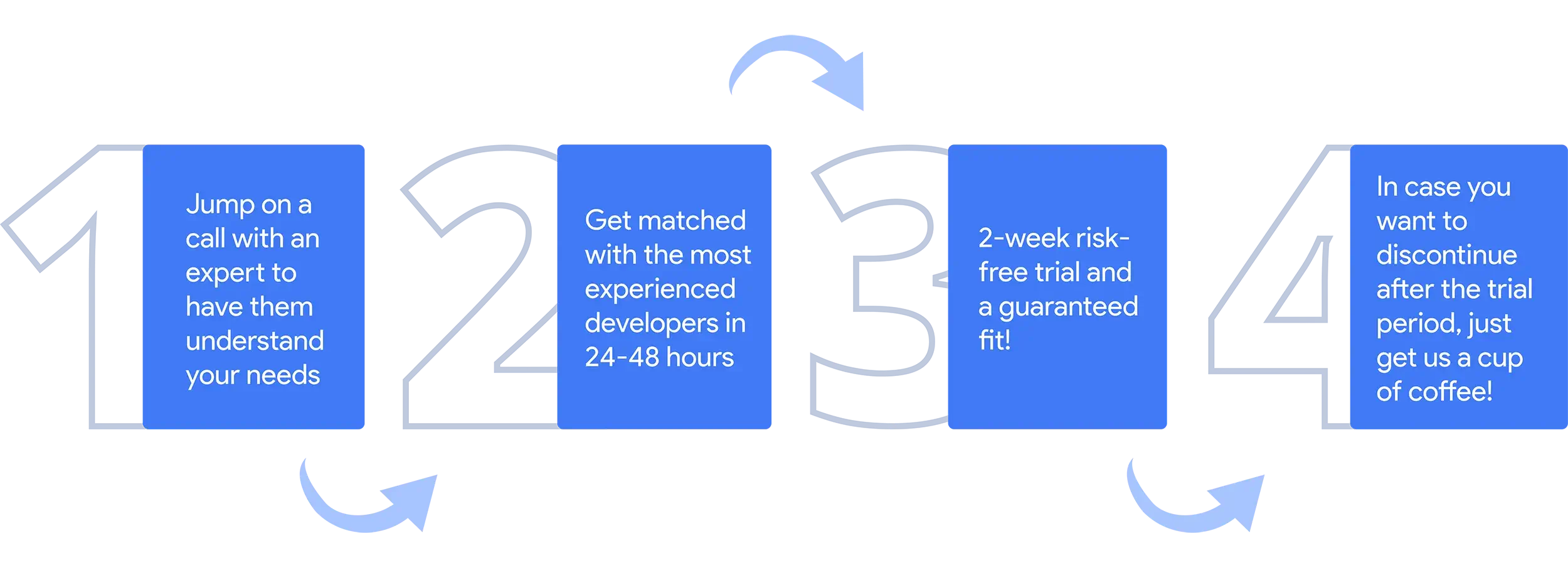
Our hiring process is simple. Ever walked into your favorite coffee shop and felt completely relaxed knowing your barista’s got your back? That’s the experience we want to replicate when you come to us for hiring engineers.
We take time to ensure your exact needs are understood, and only the most suitable PHP Laravel programmers are hired by our clients.
If you do not feel like the “match” was suitable, we will simply match you with another.

We exist to unlock human potential at scale. We envision a world where the most talented people can build a career commensurate with their ability – not their race, gender, or geography.
Our Engineers
have worked for
Our Engineers
have worked for

Browse through hundreds of profiles and find your dream match

Experience
Hourly Rates

Experience
Hourly Rates

Experience
Hourly Rates

Experience
Hourly Rates








Written by Mustafa Najoom
CEO at Gaper.io | Former CPA turned B2B growth specialist
View LinkedIn ProfileTL;DR: Finding jQuery Developers Who Understand Modern Web Development
Table of Contents
8,200+ Engineers | Top 1% Talent | 24-Hour Assembly | Starting $35/hr
Maintaining complex jQuery systems?
Gaper assembles vetted full-stack developers experienced with legacy jQuery codebases in 24 hours. 8,200+ specialists ready to enhance and modernize your applications starting at $35/hr. No long-term commitment.
Get a Free AI AssessmentjQuery dominates legacy web applications despite the rise of modern frameworks like React, Vue, and Angular. According to W3Techs, jQuery remains present on approximately 77% of all websites with known JavaScript libraries, making it statistically the most-deployed JavaScript library globally. Simultaneously, jQuery adoption has declined sharply in new projects, with React claiming roughly 40-45% of new projects and Vue approximately 15-20%. This creates a nuanced hiring challenge: jQuery expertise is abundant among experienced developers but increasingly scarce among junior developers.
Understanding jQuery's historical context informs hiring decisions. Released by John Resig in 2006, jQuery solved a genuine problem: cross-browser JavaScript compatibility and DOM manipulation were painfully inconsistent across Internet Explorer, Firefox, Safari, and Chrome. jQuery abstracted this complexity, allowing developers to write once and run everywhere. For fifteen years (2006-2021), jQuery was the obvious choice for any web project. It was smaller than competing frameworks, required no build process, and dramatically simplified common web development tasks.
The Modern jQuery Developer Profile
In 2026, "jQuery developer" means someone who maintains and enhances jQuery systems, understands jQuery in historical context, refactors legacy code toward modern patterns, makes informed rewrite versus maintain decisions, and integrates modern tools with jQuery systems.
jQuery expertise breaks down along dimensions that reflect practical ability rather than just years of experience. Understanding these levels helps you recruit at the right seniority and avoid hiring overqualified or underqualified candidates.
This level includes basic DOM manipulation (selectors, .html(), .text(), .append()), event handling (.on(), .click(), .bind()), jQuery utility methods ($.each, $.map, $.ajax), jQuery plugins and how to use them, and basic CSS selectors. This level is sufficient for basic web page enhancement but inadequate for complex applications. Most developers acquire this from tutorials in a few weeks and this level doesn't differentiate competent developers; it's baseline knowledge that most developers possess.
Intermediate developers understand jQuery method chaining and fluent interfaces, AJAX patterns and asynchronous response handling, jQuery effects and animations, custom jQuery plugin development, event delegation and bubbling, this binding in jQuery contexts, template systems (Handlebars, Underscore) alongside jQuery, jQuery performance optimization (selector optimization, DOM batching), and cross-browser compatibility understanding. They can build functional web applications, enhance page interactions, and maintain complex jQuery codebases, representing a real upgrade from basic knowledge and capable of improving application maintainability measurably.
Advanced developers possess deep understanding of jQuery internals (jQuery objects, prototype chains, method resolution), advanced plugin architecture and extensibility patterns, understanding jQuery relative to modern JavaScript (when to avoid jQuery), advanced AJAX patterns including error handling, retries, and cancellation, working with jQuery and module systems (AMD, CommonJS, ES modules), systematic testing of jQuery code (unit tests, integration tests), performance profiling and optimization of jQuery applications, understanding memory leaks in jQuery applications and prevention, and building jQuery applications at scale while preventing global state. Advanced jQuery developers have often maintained large codebases through multiple iterations and are rare and valuable.
Expert jQuery developers combine technical mastery with contributions to jQuery itself or popular jQuery plugins, historical understanding of JavaScript's evolution and jQuery's role, ability to evaluate whether systems should stay jQuery, migrate partially, or rewrite completely, mentoring others in jQuery patterns and modernization strategies, designing systems that bridge jQuery and modern frameworks, and deep knowledge of cross-browser issues and how jQuery addressed them. These typically senior engineers (8+ years) who've worked on multiple large jQuery systems are valuable not primarily for jQuery expertise but for wisdom about legacy systems and technical debt.
Before recruiting jQuery developers, clarify what you're actually hiring for. Different needs require different seniority levels and compensation ranges. Misaligning job requirements with candidate levels leads to hiring failures, frustration, and wasted recruiting time.
If you need someone to maintain a stable jQuery codebase applying small fixes and enhancements without major refactoring, you need someone with solid intermediate jQuery knowledge, debugging and troubleshooting skills, understanding of the specific codebase domain, comfort working in legacy code, and ability to write tests for changes. You don't necessarily need experts here. Mid-level developers comfortable with jQuery excel at this role. Compensation: $70k-$130k depending on location and seniority.
If you need someone to add substantial features to jQuery systems, you need advanced jQuery knowledge, ability to refactor existing code to support new features, understanding of architectural patterns in your codebase, ability to mentor other developers working in the system, and strong debugging and profiling skills. This requires mid-to-senior level developers. Compensation: $90k-$160k depending on location and seniority.
If you need someone to modernize jQuery systems or plan migrations to React/Vue, you need advanced jQuery understanding, deep knowledge of React or Vue, experience with large-scale system migrations, ability to make technical tradeoff decisions, and understanding of incremental migration strategies. This requires senior engineers (5+ years experience). Compensation: $130k-$220k depending on location.
jQuery developers don't self-identify in job searches the way React or Python developers do. Finding them requires understanding where they concentrate and what channels surface the most qualified candidates. Most jQuery specialists work in specialized domains rather than identifying by framework.
Certain domains heavily use jQuery. WordPress development communities heavily use jQuery; WordPress theme and plugin developers often have strong jQuery experience accessible through WordPress Jobs and WP Tavern Jobs. E-commerce platforms including Magento, Shopify theme development, and custom e-commerce systems often rely on jQuery, accessible through e-commerce specific job boards. Financial services legacy applications often use jQuery, accessible through fintech job boards and financial services recruiting channels.
Gaper provides full-stack developers and legacy system specialists comfortable with jQuery across multiple domains. Unlike generalist job boards, Gaper pre-vets technical capability and domain knowledge. James agent automates screening for jQuery proficiency, reducing hiring timelines. For companies needing jQuery developers on short notice, this efficiency is valuable and results in better hiring outcomes.
Developers contributing to jQuery, maintaining jQuery plugins, or actively answering jQuery questions on Stack Overflow represent proven expertise. These developers often value interesting technical challenges and growth opportunity. Identify them through Stack Overflow reputation, GitHub contributions to jQuery-related projects, and participation in jQuery community forums.
James HR Agent for jQuery Hiring
Gaper's James agent pre-screens developers for jQuery expertise, legacy code comfort, and modern JavaScript understanding, enabling rapid team assembly in 24 hours without typical 6-12 week timelines.
Evaluating jQuery developers requires assessing both jQuery knowledge and modern JavaScript understanding to identify developers who can grow with your systems and mentor others toward modern practices. Technical depth beyond jQuery alone predicts long-term value.
Present a code snippet with jQuery and ask candidates to explain what it does. Strong jQuery developers explain the event handler attachment, event prevention, DOM traversal for input values, AJAX call structure and callback handling, and understanding of success/error paths. They might also identify issues including global state effects, lack of error handling for network failures, missing validation before sending, and difficulty testing due to direct DOM interaction.
Ask about ES6+ features and how they'd refactor legacy jQuery. Provide a callback-heavy jQuery code snippet and ask how they'd refactor using modern JavaScript (ES6+, async/await). Strong candidates rewrite using async/await instead of promise chains, use const/let instead of var, leverage arrow functions for cleaner code, discuss how this improves readability and testability, and mention module systems and bundlers. This reveals whether they're stuck in 2010-era patterns or understand modern JavaScript evolution.
Provide a moderately complex jQuery function and ask what improvements they'd make. Good candidates identify nested callbacks (callback hell) and suggest refactoring to promises or async/await, note that direct DOM manipulation makes testing difficult, recognize the absence of error handling for network failures, flag string concatenation for HTML (vulnerable to XSS), and understand difficulty reusing data-fetching logic. This reveals whether they understand modern patterns and can refactor legacy code safely.
| Evaluation Method | What It Reveals | Good Signal |
|---|---|---|
| jQuery Code Review | Fundamental knowledge, understanding of patterns, issue identification | Explains patterns clearly, identifies 2+ issues, suggests improvements |
| Modern JavaScript Refactoring | Understanding of modern patterns, growth potential, ES6+ knowledge | Proposes async/await, discusses benefits, mentions module systems |
| Legacy Code Refactoring | Problem-solving approach, testing mindset, architecture thinking | Identifies multiple issues, understands testability, suggests improvements |
| Testing Approach | Quality mindset, tool knowledge, testing discipline | Knows testing tools, understands jQuery testing challenges, has used frameworks |
Ready to hire jQuery developers?
James agent pre-screens full-stack developers with jQuery experience in minutes, compressing typical 8-12 week hiring timelines into 24 hours of team assembly.
Hire Developers NowjQuery developers spend much of their careers managing legacy code. Assessing capability here predicts success in jQuery roles. Legacy code management skills transcend jQuery and apply across all maintenance work.
Ask about a complex bug they've fixed. Have them walk you through how they diagnosed the root cause, what tools they used (browser dev tools, debugger, console.log), how they verified the fix worked, and how they prevented regression. Strong candidates use systematic approaches to diagnosis, know debugging tools deeply, write tests to verify fixes, and understand root causes rather than just symptoms.
Ask about inherited large codebases they didn't write. What's their approach to understanding existing code? How do they approach making safe changes to unfamiliar code? Good answers include reading code systematically before making changes, writing tests before refactoring, using git blame and version history to understand why code works a certain way, asking colleagues about design decisions, and documenting understanding in code comments.
Ask how they balance new features with refactoring in legacy code. Describe a time they refactored risky code and how they ensured correctness. When would they say code needs to be rewritten? How do they make the business case for paying down technical debt? Strong developers demonstrate pragmatism: not all code needs perfect refactoring; focus on code that's changed frequently or poses real risk. They understand testing as risk mitigation.
If hiring someone to modernize jQuery systems, assess modernization capability specifically. Not all jQuery developers are equipped to lead technical transformation; those with successful modernization experience are valuable beyond their jQuery knowledge.
Ask about experience with React or Vue. How many projects have they built? What's their preferred React architecture pattern? How would they approach gradually migrating a jQuery app to React? Good candidates have practical React experience and understand migration strategies beyond theoretical knowledge.
Ask about systems they've modernized from older technology to newer. What went well? What didn't? How long did it take? Was it worth it? What would they do differently? Candidates with successful modernization experience understand that phased migration often succeeds where big rewrites fail, testing is essential for risk management, business priorities override technical ideals, and maintaining stability while evolving systems is an ongoing challenge.
Present a scenario: "We have a jQuery application that's 500k lines of code. Performance is acceptable, but maintainability is becoming difficult. Should we rewrite in React, migrate to Vue, refactor with modern JavaScript patterns, or something else?" Strong candidates ask clarifying questions (team size, business priority, timeline), discuss trade-offs of each option, suggest phased approaches rather than all-or-nothing decisions, consider business value alongside technical ideals, and propose measuring success metrics.
jQuery developer compensation depends heavily on seniority, location, and what role you're actually hiring for. Determining market rates ensures you compete effectively for talent while making smart budget decisions.
| Role | Experience | San Francisco | US Hubs | Europe |
|---|---|---|---|---|
| Full-Stack Developer (jQuery) | Mid (2-5 yrs) | $110k-$170k | $90k-$140k | $60k-$110k |
| Full-Stack Developer (jQuery) | Senior (5+ yrs) | $140k-$220k | $110k-$180k | $80k-$140k |
| Legacy System Specialist | Senior (5+ yrs) | $150k-$240k | $120k-$200k | $90k-$150k |
| Technical Architect (Modernization) | Principal (8+ yrs) | $200k-$320k | $160k-$280k | $120k-$200k |
Gaper.io in one paragraph
AI Workforce Platform
Gaper.io is a platform that provides AI agents for business operations and access to 8,200+ top 1% vetted engineers. Founded in 2019 and backed by Harvard and Stanford alumni, Gaper offers four named AI agents (Kelly for healthcare scheduling, AccountsGPT for accounting, James for HR recruiting, Stefan for marketing operations) plus on demand engineering teams that assemble in 24 hours starting at $35 per hour.
Maintaining jQuery systems requires both legacy code expertise and modern JavaScript understanding. Gaper's developers specialize in jQuery-heavy systems across multiple domains and have maintained production applications for startups to Fortune 500 companies. Rather than hiring full-time engineers or waiting weeks for freelancers, Gaper's teams start in 24 hours and are productive immediately.
8,200+
Vetted Engineers
Top 1%
Vetting Standard
24hrs
Team Assembly
$35/hr
Starting Rate
Free assessment. No commitment. Let James agent find your jQuery developers.
For career development, probably not unless you're targeting legacy system maintenance roles or plan to specialize in modernization. However, understanding jQuery provides historical perspective on JavaScript's evolution and helps when working on legacy systems. Most developers learn it on the job when they encounter jQuery systems rather than as a primary skill development goal.
It depends on your business needs. If the system works well and meets business needs, migration cost often outweighs benefits. If maintainability is suffering, hiring strong jQuery developers is often cheaper than rewriting. Phased migration (gradually replacing jQuery components with React) is often the best approach, but requires architectural skill to execute successfully without regressions.
Traditional paths: jQuery developer - full-stack developer learning modern frameworks - team lead or architect. Most developers don't specialize in jQuery long-term. Instead, they use jQuery work as foundation for broader web development expertise. Career advancement typically requires expanding skills beyond jQuery into modern frameworks and architecture.
Developers stuck in jQuery sometimes feel their skills are becoming obsolete. Address this by supporting learning of modern frameworks alongside jQuery work, creating opportunities to modernize parts of systems, encouraging contributions to open source, rotating developers through different projects, and being transparent about modernization roadmap. Developers who see clear paths to modern development stay longer and remain engaged.
Good developers understand jQuery is a tool with specific purposes, understand modern JavaScript, debug systematically, and manage legacy code carefully. Bad developers treat jQuery as their only skill, resist learning modern alternatives, lack testing discipline, and make risky changes without verification. The difference shows up immediately in code review and during onboarding to new systems.
Generally, hire generalists who know jQuery. Pure specialists have limited career options and may resist needed evolution. Generalists bring broader perspective and grow with your systems. The ideal hire is a developer with 5+ years of diverse web development experience, including jQuery, who can contribute to modernization efforts while maintaining current systems effectively.
Build Your Legacy System Team
Skip 8-12 weeks of hiring. Start in 24 hours.
Gaper assembles vetted full-stack developers experienced with jQuery and legacy systems that start immediately and deliver quality enhancements from day one.
8,200+ top 1% developers. 24 hour team assembly. Starting $35/hr. No long-term commitment. James agent pre-screens for jQuery expertise in April 2026.
Get a Free AI Assessment14 verified Clutch reviews. Harvard and Stanford alumni backing. No commitment required.
Our engineers work with teams at
Rates starting from $50-$80 per hour.