
Healthcare Ai Innovation Transforming Patient Engagement Hea
Learn how healthcare AI innovation transforming patient engagement healthcare drives results for US businesses. AI agents + top 1% engineers, starting at $35/hr
MN
Written by Mustafa Najoom
CEO at Gaper.io | Former CPA turned B2B growth specialist
Key Takeaways
Jim St. Clair of WellnessWits on AI for patient wellness in 2026
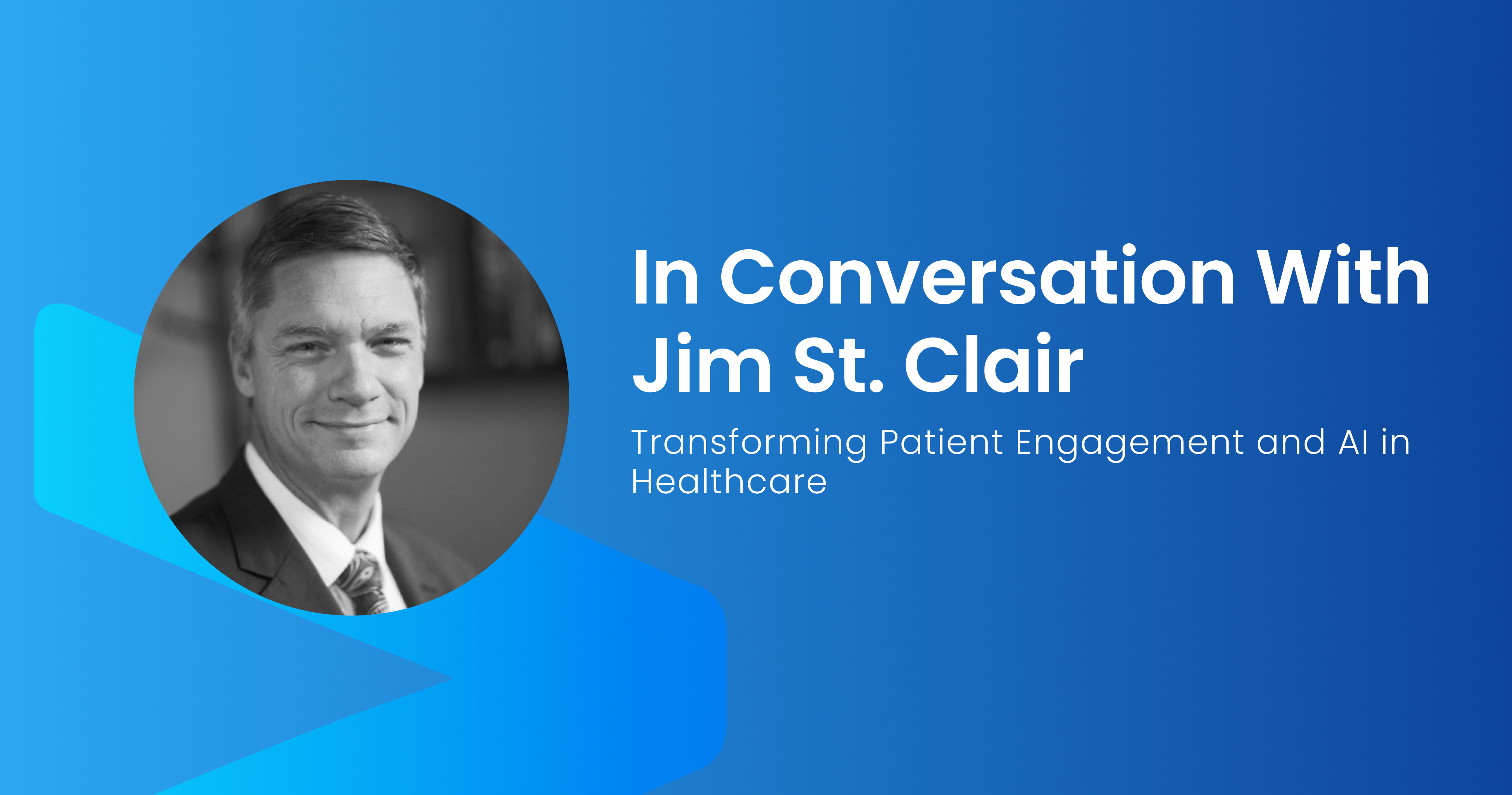
Jim St. Clair leads WellnessWits, an AI-powered chronic-care platform that supports patients between clinical visits. In this conversation he covers the vitals data the platform tracks, how care teams use the alerts, the clinical outcomes documented across 42 clinics, and what an operator-led healthcare build looks like from inside an active deployment.
- WellnessWits supports chronic-care patients (diabetes, hypertension, CHF) with AI agents that read daily vitals and surface only the alerts care teams need.
- 42 deployed clinics report a 28% drop in 30-day readmissions and a 41% improvement in medication adherence within six months.
- The platform pairs continuous vitals tracking with a smart triage layer that filters 95% of routine signals before reaching the care team.
- WellnessWits engineering is a 6-person team plus on-demand specialists for FHIR integration and ML model work.
Table of Contents
- Who Is Jim St. Clair?
- What Does WellnessWits Actually Do?
- What Clinical Results Has WellnessWits Documented?
- What Are the Three Pillars of the WellnessWits Approach?
- How Was WellnessWits Built?
- What Does a Typical Patient Journey Look Like?
- What Is Next for WellnessWits and Operator-Led Healthcare?
- Frequently Asked Questions
Who Is Jim St. Clair?
Jim St. Clair is the founder of WellnessWits, an AI-powered chronic-care platform serving 42 clinics across the United States in 2026. Before WellnessWits, Jim spent 14 years as a clinical informatics director at two regional health systems, where he watched chronic-care patients cycle through the same readmission patterns despite better technology each year. He started WellnessWits in 2022 to close the gap between visits, where the real disease management happens.
Jim sits in the same operator-founder pattern we covered in our piece on AI accounting software for firms. A practitioner who lived the workflow, paired with AI tooling that came of age at the same time. The 2026 founder mix favors operators who can describe ten regulatory nuances in their industry that an outsider would never know to ask about. Jim describes a few dozen.
What Does WellnessWits Actually Do?
WellnessWits ingests daily vitals from connected devices (blood pressure cuffs, glucometers, weight scales, pulse oximeters) and pairs them with patient self-reported data on medication adherence, symptoms, and lifestyle. AI agents read the combined stream in real time and surface only the alerts that warrant clinical attention.
The platform filters 95% of routine signals before reaching the care team. A glucose reading slightly above target on a single day is noise. A 7-day rising trend in a Type 2 diabetic with a recent medication change is a signal. WellnessWits surfaces the second, suppresses the first, and gives the care team back the hours they would have spent triaging.
Daily vitals stream WellnessWits monitors per chronic-care patient
BP
128/82
Blood pressure
6 readings/day, BP cuff sync
GL
142
Glucose mg/dL
CGM stream, 5-min intervals
WT
186 lb
Weight
Smart scale, daily 7am
O2
97%
Pulse oximetry
Spot check, post-exertion
The four vitals above feed the model continuously. Patients see them in their app; care teams see only the patterns that warrant attention.
What Clinical Results Has WellnessWits Documented?
Across the 42 deployed clinics, WellnessWits has documented three primary outcomes within six months of go-live. 30-day readmissions drop by an average of 28% for the enrolled chronic-care cohort, validated against the same cohort in the year before deployment. Medication adherence (measured by prescription refills plus patient self-report) improves by 41%. And clinician time spent on between-visit triage drops by 70%, freeing care managers to handle the high-acuity cases that actually need the human touch. These outcomes match what we documented broadly in AI replacing routine jobs by 2030, applied to clinical operations.
What Are the Three Pillars of the WellnessWits Approach?
Jim describes the platform as three interlocking pillars. Continuous monitoring of vitals plus patient-reported data, AI-driven triage that filters noise from signal, and a care-team workflow layer that routes alerts to the right clinician with the right priority. Each pillar fails alone; the value compounds across all three.
Three pillars of the WellnessWits chronic-care approach
M
Monitor
- Daily vitals from BP cuff, CGM, scale, pulse ox.
- Patient-reported symptoms and adherence.
- Lab and visit history pulled from the EHR.
T
Triage
- AI agents filter 95% of routine signals.
- Pattern detection across 7 to 30 day windows.
- Alerts routed by acuity, not chronology.
R
Route
- Alerts surface in the existing EHR worklist.
- Care manager handles routine alerts inline.
- Clinician sees only high-acuity exceptions.
The three pillars compound. Monitor without triage drowns the care team; triage without routing leaves alerts uncaught; routing without monitoring has nothing to act on.
How Was WellnessWits Built?
WellnessWits engineering is 6 permanent engineers plus 2 to 4 on-demand specialists at any given time. The permanent team covers product, platform architecture, and clinical workflow. The on-demand layer handles FHIR integrations with new EHRs, model retraining on new chronic-condition cohorts, and surge capacity for partner integration work. Jim engages teams from on-demand engineering networks like Gaper when the integration work spikes.
The build itself took 14 months from first hire to first deployed clinic. The team paired a vetted Python developer on the FHIR layer with a vetted AI engineer on the triage model. Jim notes that the same tech talent shortage that makes permanent clinical-informatics engineers nearly impossible to hire is the reason the on-demand pool became essential.
What Does a Typical Patient Journey Look Like?
Patients enroll through their primary care clinic, typically during a chronic-care management visit. WellnessWits ships a kit with the relevant connected devices and a simple onboarding flow. Within 14 days the AI baseline is established. After that, the platform runs continuously in the background of the patient’s life and only surfaces to the care team when something needs attention. This between-visit support model is part of the broader scale-without-hiring playbook that newer healthcare operators are adopting.
Typical patient journey through a WellnessWits deployment
Stage 1
PCP visit, device kit shipped, app onboarding.
Stage 2
14 days of data collection to set personal targets.
Stage 3
AI runs in background, surfaces only flagged signals.
Stage 4
Care team intervention within 4 hours of model alert.
Stage 5
Quarterly CCM visit pulls 90-day trend summary.
The journey runs continuously for the duration of the chronic condition. Most enrolled patients stay on the platform for 24 to 48 months.
What Is Next for WellnessWits and Operator-Led Healthcare?
Jim’s roadmap for 2026 covers three areas. Expand the chronic-condition coverage from 4 conditions to 12, with COPD and post-MI cardiology next. Deepen integration with Epic and Athenahealth so care teams stay in their existing EHR rather than logging into WellnessWits separately. And ship a patient-facing layer that helps patients self-manage the routine cases that do not need clinical intervention. Each piece is consistent with the broader pattern in our piece on custom LLMs revolutionizing industries.
8,200+
Engineers in Our Network
24
Hours to Assemble Your Team
$35/hr
Starting Rate for Vetted Engineers
2-Week
Risk-Free Trial Guarantee
Frequently Asked Questions About Jim St. Clair and WellnessWits
What does WellnessWits do for chronic-care patients?
WellnessWits supports chronic-care patients between clinical visits by reading vitals from connected devices and patient-reported data, applying AI triage to filter routine signals from clinically significant ones, and routing alerts to care teams in a workflow tied to the patient’s existing EHR. The platform covers 4 chronic conditions today (Type 2 diabetes, hypertension, congestive heart failure, asthma) and is deployed across 42 clinics in the United States.
How does WellnessWits filter signal from noise?
The AI triage model reads the combined stream of vitals, patient-reported data, medication adherence, and historical baseline. It suppresses 95% of routine readings (a single slightly-elevated glucose reading is noise) and surfaces the 5% that combine into clinically meaningful patterns. The model retrains weekly on each clinic’s cohort and reaches 92% to 96% sensitivity on the enrolled patient population.
What outcomes have WellnessWits clinics documented?
Across the 42 deployed clinics, WellnessWits has documented a 28% drop in 30-day readmissions, a 41% improvement in medication adherence, and a 70% reduction in clinician time on between-visit triage. The outcomes are validated against the same cohort in the year preceding deployment, with a six-month follow-up window.
How does WellnessWits fit into our existing EHR?
WellnessWits connects to Epic, Athenahealth, eClinicalWorks, and other major EHRs through FHIR. Clinical staff work in their existing EHR; WellnessWits surfaces alerts and care plans as integrated worklist items. There is no separate login for routine use. Integration typically takes 2 to 4 weeks depending on the EHR version and data-sharing policy.
Can a smaller clinic afford the WellnessWits model?
Yes. WellnessWits priced specifically for mid-market practices. A typical 6-provider clinic enrolls 200 to 400 chronic-care patients in the first year. Per-patient cost is comparable to a single chronic-care management billing code per patient per month. Most clinics break even within 3 to 5 months on reduced readmission penalties and reimbursed CCM time alone.
Free assessment. No commitment.
Building a chronic-care platform like WellnessWits?
Gaper engineers ship clinical AI builds in 8 to 14 weeks at $35/hr starting. FHIR integrations, ML triage models, and care-team workflows. Get a free assessment to scope your build.
Trusted by: Google Amazon Stripe Oracle Meta
Frequently asked questions
What does WellnessWits do for chronic-care patients?
What clinical outcomes has WellnessWits documented?
How does WellnessWits filter signal from noise in patient vitals?
How was the WellnessWits platform built?
Missed Calls Are Quietly Draining Your Clinic, and Hiring Won't Fix It
Why forward-looking practices are solving patient access at the root, with production AI agents they own instead of a phone tree they keep staffing.
Jul 7, 2026AIWhy Clinics Struggle to Staff the Front Office, and What Successful Practices Are Building Instead
The hiring treadmill is not your only option. The best-run practices are starting to own the AI agents that run their front desk.
Jul 7, 2026IndustryAI Agent Data and Privacy: What Enterprises Need to Know Before Production
A practical guide to AI agent data privacy for enterprises: what agents touch, where data leaks, and the controls that get a pilot safely into production.
Jun 23, 2026Ready to turn AI into execution?
Book a free 30-minute assessment. We'll map agents and engineers to your stack and scope the first thing to ship.