
LLMs for Emotional Support: What They Can and Can't Do
What AI mental-health tools can help with, triage and between-session support, and their hard limits. Not a substitute for crisis care.
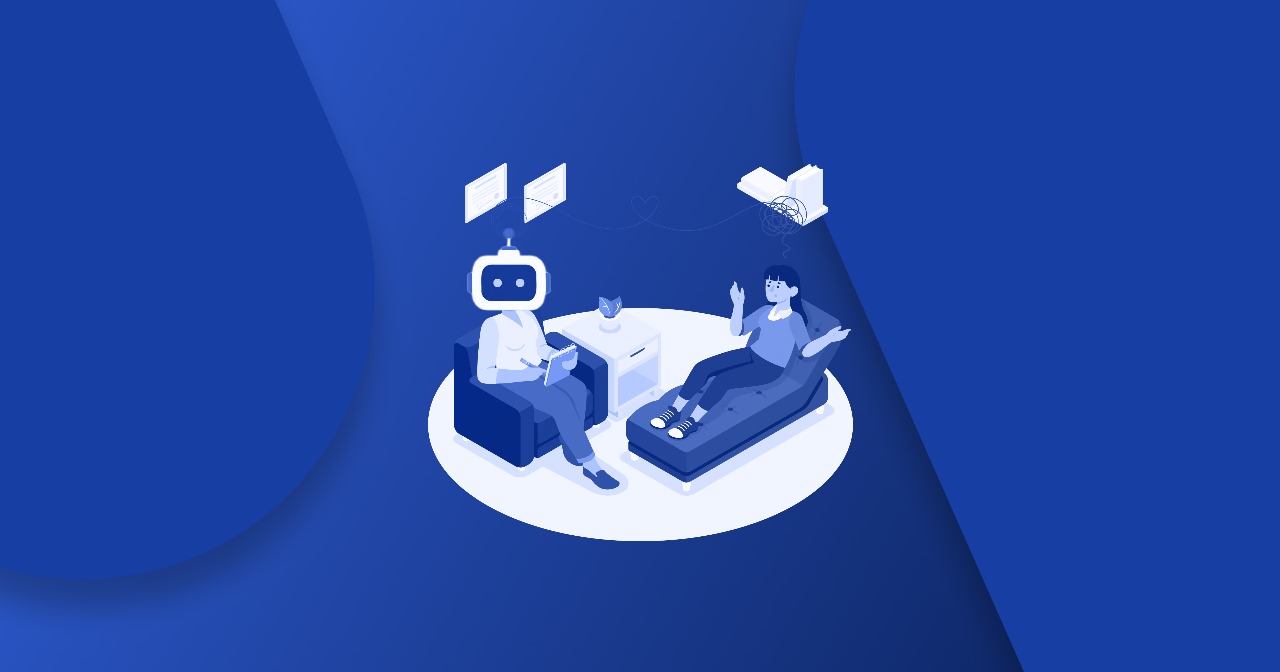
If you or someone you know is in crisis, contact the 988 Suicide and Crisis Lifeline (call or text 988 in the US). AI mental health tools are not a substitute for crisis care.
TL;DR: What AI Mental Health Tools Can and Cannot Do in 2026
- Roughly 1 in 5 US adults lives with a mental illness, per NIMH data. Demand outstrips supply.
- AI chatbots can help with triage, between-session support, psychoeducation, mood tracking. Supported by peer-reviewed clinical research.
- AI cannot replace crisis care. The 988 Lifeline remains the escalation path.
- Published JAMA Psychiatry and Lancet Digital Health trials show modest but real effects for mild to moderate symptoms.
- Highest ROI mental health AI use case is not AI therapy. It is admin automation freeing clinician time.
Table of Contents
- What Is an AI Mental Health Companion?
- What the Clinical Research Actually Shows
- The Top 6 AI Mental Health Tools in 2026
- The Limits of LLMs in Clinical Mental Health Work
- HIPAA Compliance Checklist for AI Vendors
- How Clinics Use AI Agents to Reduce Admin Burden
- How Gaper Builds HIPAA Compliant AI
- FAQs
Evaluating AI mental health tools for your practice?
Get a free 30 minute clinical AI assessment with a senior Gaper engineer. We walk through the HIPAA compliance checklist for your specific practice and identify the highest ROI AI use cases. No obligation.
What Is an AI Mental Health Companion? (2026 Definition)
An AI mental health companion is a software tool that uses natural language understanding (typically a large language model in 2026) to provide mental health related support to users. In 2026 these tools fall into four clinical categories: triage and screening, between-session support and psychoeducation, mood tracking and journaling, and consumer wellness chat. None of them replace licensed clinicians for crisis care or formal diagnosis.
The category exploded after the November 2022 launch of ChatGPT, but the core research on AI mental health tools goes back to ELIZA, a pattern-matching psychotherapy simulator built at MIT in 1966. What changed in 2022 was not the idea, but the quality of the underlying language models.
The 4 Clinical Categories
- Triage and screening. AI tools that ask standardized mental health questions (PHQ-9 for depression, GAD-7 for anxiety) and route users to the right care level.
- Between-session support and psychoeducation. AI chatbots that help clients practice CBT between sessions, provide grounding exercises, explain concepts.
- Mood tracking and journaling. Low risk, high engagement. Pattern identification and simple interventions.
- Consumer wellness chat. General purpose emotional support chatbots without clinical oversight. Biggest regulatory and safety concerns.
Why This Category Exploded After 2022
Demand for mental health care in the US has outpaced supply for over a decade. According to the Health Resources and Services Administration (HRSA), more than 169 million Americans live in federally designated Mental Health Professional Shortage Areas as of 2024. Average wait time for a first psychiatric appointment is measured in months, not days. Into this supply gap came ChatGPT in 2022, followed by Claude and Gemini. Suddenly anyone could build an AI mental health tool in a weekend.
What the Clinical Research Actually Shows
This is the part most vendor blog posts skip.
The 2017 Woebot Randomized Controlled Trial
The foundational study is Fitzpatrick, Darcy, and Vierhile (2017), a randomized controlled trial published in JMIR Mental Health. 70 college students with depression or anxiety symptoms were randomized to Woebot or an information-only control. After 2 weeks, the Woebot arm showed statistically significant reductions in PHQ-9 depression scores. Small sample, short follow up, but real evidence.
The 2022 Wysa NHS Trial
Wysa was studied in a UK National Health Service trial published in JMIR mHealth and uHealth. The trial evaluated Wysa as an adjunct to care in patients waiting for human therapy. Results showed moderate improvements in anxiety and depression scores among users who engaged weekly. The tool was framed as a bridge to human care, not a replacement.
Where LLMs Failed or Caused Harm
The Koko incident in January 2023 is the canonical warning. Koko’s co-founder publicly disclosed that the company had used GPT-3 to generate mental health support messages without telling users they were AI-generated, triggering significant backlash. More concerning, at least one published case report described an AI chatbot failing to recognize suicidal ideation. The American Psychological Association issued guidance warning that general-purpose LLMs should not be used as the primary tool for crisis care without explicit safety controls and clinician oversight.
The Top 6 AI Mental Health Tools in 2026 (Honest Comparison)
| Tool | Research | Regulatory | Best For |
|---|---|---|---|
| Woebot | Strongest (multiple RCTs) | Non-medical device | CBT-based psychoeducation |
| Wysa | Multiple peer-reviewed | CE marked (UK) | Between-session support |
| Youper | Growing | FDA Breakthrough Designation | Primary care integration |
| Replika | None published | Consumer app | Not recommended for clinical use |
| Koko | Hybrid model | Consumer app | Peer support only |
| Custom LLM solutions | Depends on build | Varies | Clinics with engineering |
The Limits of LLMs in Clinical Mental Health Work
Why LLMs Cannot Replace Crisis Intervention
Large language models are trained to produce plausible text, not to assess suicide risk, detect psychosis, or recognize subtle clinical cues. The American Medical Association’s guidance on AI in healthcare is clear that clinical decision-making remains the responsibility of licensed clinicians. If someone is in crisis, the correct answer is always a human clinician and an established resource. 988 Lifeline is the US national crisis line.
Privacy and HIPAA Compliance Gaps
Most consumer AI mental health apps are NOT HIPAA compliant. Per HHS.gov guidance, HIPAA only applies to covered entities (providers, health plans, clearinghouses) and their business associates. A consumer wellness app that collects emotional data but is not contracted with a provider is generally not HIPAA covered. For clinic deployment, use a vendor that signs a Business Associate Agreement (BAA) and treats data as PHI. Woebot and Wysa offer this. Most consumer tools do not.
Need custom HIPAA compliant AI for your practice?
A HIPAA Compliance Checklist for AI Mental Health Tools
Before deploying any AI mental health tool, answer these 10 questions in writing. If the vendor cannot answer any one of these clearly, do not deploy.
- Does the vendor sign a Business Associate Agreement (BAA)?
- Where is patient data stored and processed (US vs international)?
- Is patient data used to train the underlying LLM? Can you opt out?
- What is the breach notification policy? (HIPAA requires 60 day notification.)
- What crisis escalation protocol does the tool follow? Does it integrate with 988?
- Is there a clinical review process for content updates to the tool?
- What peer-reviewed research supports the specific tool in your patient population?
- What is the process for a patient to correct or delete their data?
- Does the tool comply with state privacy laws (California CMIA, Washington My Health My Data)?
- Who is the accountable clinician if a patient acts on the tool’s output and experiences harm?
More than 169 million Americans live in federally designated Mental Health Professional Shortage Areas.
Source: Health Resources and Services Administration (HRSA) 2024 data.
How Clinics Are Using AI Agents to Reduce Admin Burden
Here is the counterintuitive finding from the 2024 to 2026 literature: the highest ROI AI tool for most mental health practices is not an AI therapist. It is AI administrative automation.
A typical mental health practice spends 30 to 40 percent of clinician time on administrative tasks: scheduling, insurance verification, intake forms, no-show follow up, documentation. Every hour of admin burden is an hour not spent with patients. AI agents built for healthcare admin handle those tasks automatically.
Why Admin Automation Is the Highest ROI Mental Health AI Use Case
A licensed clinical psychologist bills roughly $200 to $300 per hour. If AI saves that clinician 10 hours per week on admin, the clinic captures $80,000 to $120,000 in additional annual revenue per clinician. Compare that to the uncertain and potentially risky benefit of AI chatbots providing direct therapy.
How Gaper Builds HIPAA Compliant AI for Healthcare
Gaper.io in one paragraph
Gaper is the AI-native implementation partner that deploys supervised AI agents you own. The engineer pool includes specialists in HIPAA compliant system design who have shipped production healthcare software bound by BAAs with major health systems.
HIPAA
BAA Available
Frequently asked questions
Can AI mental health companions replace therapists?
Is ChatGPT HIPAA compliant for mental health use?
What is the highest-ROI AI use case for mental health practices?
How do Woebot and Wysa compare as evidence-based tools?
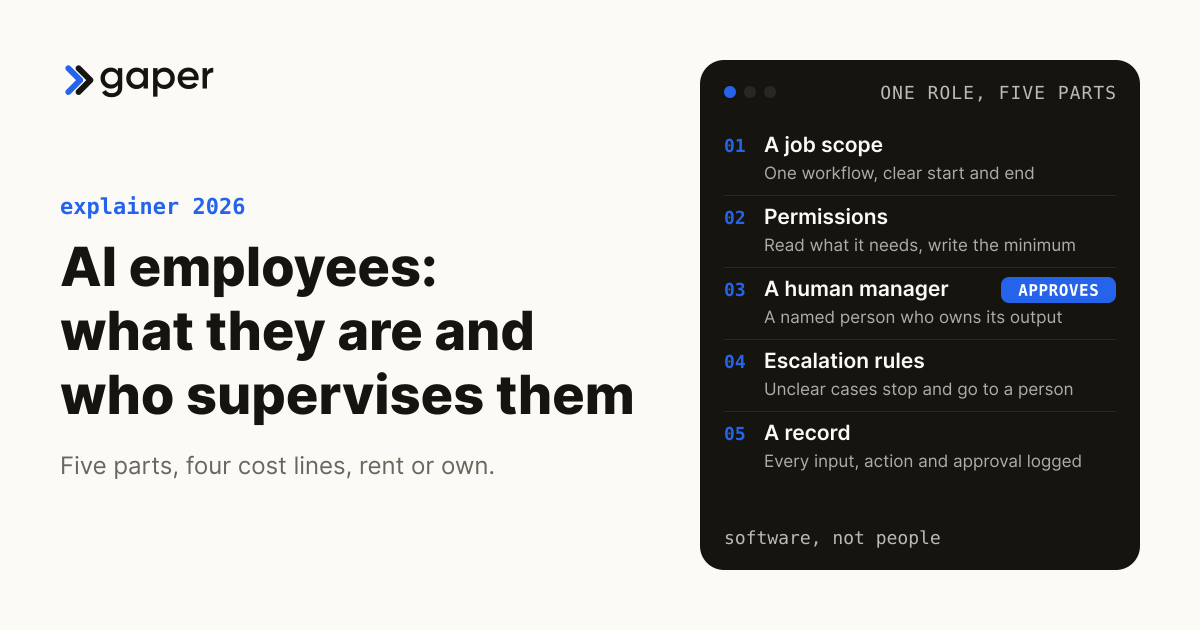
AI Employees: What They Are, What They Cost to Run, and Who Supervises Them
IndustryAI Agents for HR: Screening, Onboarding, and Support That Run in Production
A practical guide to AI agents for HR, where screening, onboarding, and employee support agents earn their keep, and what it takes to get them running in production.
May 23, 2026IndustryHow AI Agents Are Reshaping Customer Support Teams
AI agents are changing how support teams work, not by replacing them, but by absorbing repetitive tickets. Here's what production deployment actually takes.
May 4, 2026Ready to turn AI into execution?
Book a free assessment of one workflow. We map it, make an honest build versus buy call before any code, and if an off the shelf product covers the job we will tell you so.